Introduction
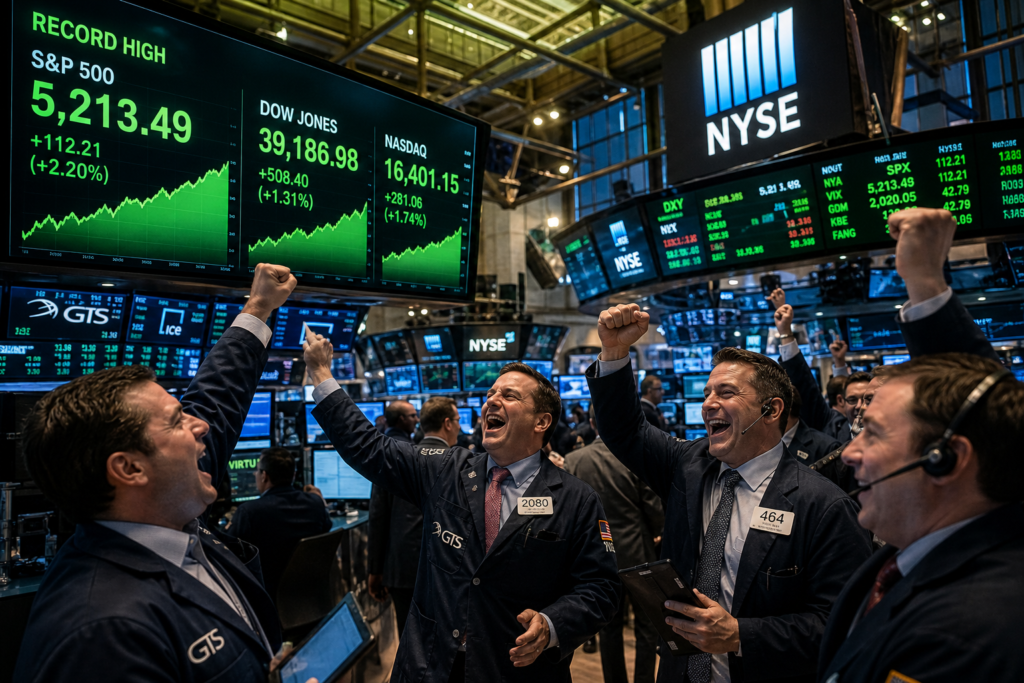
Wall Street is celebrating. On the final day of April 2026, both the S&P 500 and Nasdaq Composite notched simultaneous all-time closing highs — a milestone that would have seemed optimistic just weeks earlier when oil prices were flirting with $120 a barrel and inflation fears were reigniting. The S&P 500 closed at 7,230.12, while the Nasdaq surged to 25,114.44, both cementing record closes that sent investors into the new month with renewed confidence.
But beneath the euphoria lies a more complex story — one of resilient corporate earnings, concentrated tech gains, persistent inflation, geopolitical risk, and a Federal Reserve that isn’t ready to blink. Understanding what is powering this rally, and what could end it, is essential for every investor navigating markets in 2026.
The Numbers Behind the Record Run
The S&P 500 has climbed nearly 10% in just the past month, and is up more than 27% year-over-year. The Nasdaq’s gains have been even more pronounced, led by the relentless dominance of mega-cap technology. Meanwhile, the Dow Jones Industrial Average has been the laggard, slipping slightly on the final day of April to settle at 49,499 — a reflection of the two-speed market currently in play.
The divergence between the Dow and the tech-heavy indexes tells an important story. Traditional blue-chip names are feeling the squeeze of higher energy costs, still-elevated inflation, and cautious consumers. Tech, by contrast, is riding a wave of AI-driven earnings optimism that is reshaping corporate America’s profit landscape from the ground up.
Year-to-date, the S&P 500 has posted gains that are tracking toward the high-single to double-digit range that Goldman Sachs forecast at the start of the year, with the bank maintaining a year-end target of 7,600.
What Is Driving the Rally?
Earnings Season: The Real Engine
Corporate earnings have been the bedrock of this rally. The S&P 500’s blended net profit margin has hit 13.4% — the highest since 2009 — with estimates climbing further to 14.6% by year-end. Analysts are projecting 14% to 16% annual earnings-per-share growth in 2026, a remarkable figure that, if delivered, would justify current elevated valuations.
Apple’s fiscal Q2 earnings delivered the most recent push upward, with shares climbing over 3% after the company posted a revenue beat and issued a better-than-expected outlook for the current quarter, even as iPhone revenue fell slightly short of expectations. The market’s willingness to look past that minor miss and focus on the strong forward guidance is emblematic of the current “glass half-full” investor psychology.
AI Investment as a GDP Driver
Perhaps the most striking macro-level development is that AI investment literally carried US GDP growth in Q1 2026. Commerce Department data showed the economy expanded at a 2% seasonally adjusted annualized pace in the first quarter — beating the weak 0.5% recorded in Q4 2025 — and analysts point directly to AI-related capital expenditure as the primary stabilizing force, offsetting signs of softening private consumption.
Goldman Sachs estimates that AI investment is expected to drive roughly 40% of S&P 500 earnings growth in 2026, with the largest cloud computing companies collectively planning to spend an estimated $670 billion this year. That is more than 90% of their expected cash flows — a staggering commitment that underscores just how structurally embedded the AI build-out has become.
Buybacks and M&A Signal Corporate Confidence
While headlines focus on stock prices, the real vote of confidence from corporate America is showing up in the balance sheet. Year-to-date share buyback authorizations have hit a record $422 billion, and announced strategic merger-and-acquisition volumes have more than doubled compared to a year ago. These are not the actions of executives who fear a recession.
The Risks Lurking Beneath the Surface
Market Breadth Remains Dangerously Narrow
For all the celebratory headlines, Goldman Sachs Research notes that market breadth — the share of stocks actually participating in the rally — has dropped to one of its narrowest levels since the dot-com era. The top 10 stocks in the S&P 500 account for approximately 40% of the index’s total value. When gains are this concentrated, any stumble from the handful of dominant names can trigger an outsized correction.
Inflation and the Fed’s Frozen Stance
The Federal Reserve held rates steady at 3.5%–3.75% for a third consecutive meeting in late April, citing elevated energy prices linked to the ongoing Iran conflict. With inflation stuck above the Fed’s 2% target and markets now pricing in no rate changes well into 2027, the cost of capital remains meaningfully restrictive. Any resurgence of inflation — especially if oil prices spike again — could compress equity valuations sharply.
The “Sell in May” Seasonal Warning
History offers a note of caution. The old Wall Street maxim “sell in May and go away” reflects a well-documented seasonal pattern of underperformance in equities between May and October. However, JPMorgan’s trading desk points out that the S&P 500 has averaged a return of 1.5% in May over the past decade, with further gains in subsequent months — suggesting the seasonal effect may be less pronounced during strong bull cycles.
The Road Ahead: Can the Rally Continue?
Morgan Stanley’s Global Investment Committee entered 2026 projecting near double-digit returns for the S&P 500, with a target of around 7,500. With the index already approaching that level by early May, the question is whether the market has front-run its own fundamentals.
The bull case rests on continued earnings delivery, further AI monetization, and the eventual easing of geopolitical tensions around Iran. The bear case centers on inflation re-acceleration, Fed policy missteps, and the inherent fragility of a rally built on so few names.
For investors, the consensus advice from major institutions is to prioritize quality — companies with durable earnings advantages, exposure to AI infrastructure, and strong balance sheets capable of weathering whatever volatility the second half of 2026 may bring.
Conclusion: Record Highs Demand Elevated Vigilance
The S&P 500 and Nasdaq are writing history. But markets at record highs demand the most rigorous analysis, not the least. The combination of AI-driven earnings growth, record buybacks, and resilient corporate fundamentals provides a solid foundation. Yet the warning signs — narrow breadth, persistent inflation, a frozen Fed, and geopolitical uncertainty — are not to be dismissed.
Investors would be wise to celebrate the milestone, then get back to work examining what lies beneath the surface. The next leg of this bull market, if it comes, will be earned rather than given.