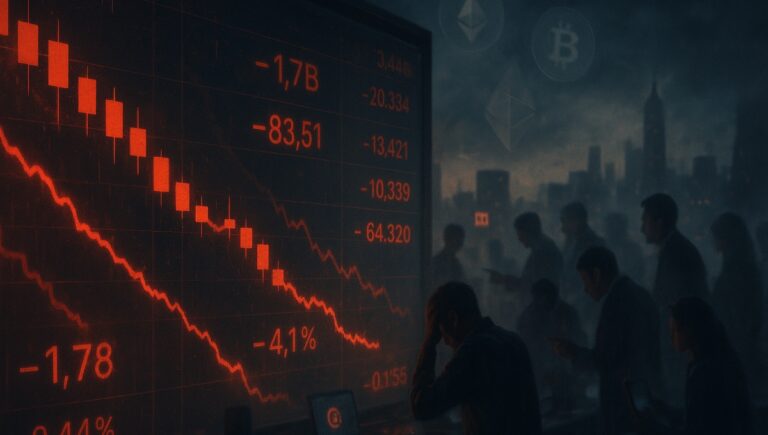
If you have been watching Bitcoin lately, you probably feel a mix of confusion, anxiety, and cautious hope. One day the market looks ready to bounce, and the next day fear quietly creeps back in. The BTCUSD chart tells a powerful story — not just of numbers, but of emotions, expectations, and patience being tested. This article breaks down the current Bitcoin price structure in simple, human-friendly language, explaining what the chart reveals, why traders are cautious, and what the coming weeks could mean for investors and long-term believers.
Understanding the Current Bitcoin Price Structure
Bitcoin’s daily chart reveals a market that has gone through intense emotional phases — optimism, panic, exhaustion, and now hesitation. After reaching higher price levels earlier, Bitcoin faced strong rejection and entered a sharp correction. This decline was not slow or gentle; it was aggressive, reflecting fear-driven selling and profit booking by large players. Such moves usually shake confidence, especially among retail investors who buy near highs.
At present, Bitcoin is trading well below its previous resistance zone, indicating that sellers still control the broader trend. However, the selling pressure has slowed. The price has started moving sideways, forming a structure where buyers are quietly trying to regain strength. This phase is critical because markets often decide their next major direction here — either a recovery rally or another breakdown.
From a psychological standpoint, this is where emotions are mixed. Some traders see opportunity, others fear further losses. The chart shows price compression, which often precedes a strong move. The direction of that move will define sentiment for months ahead.
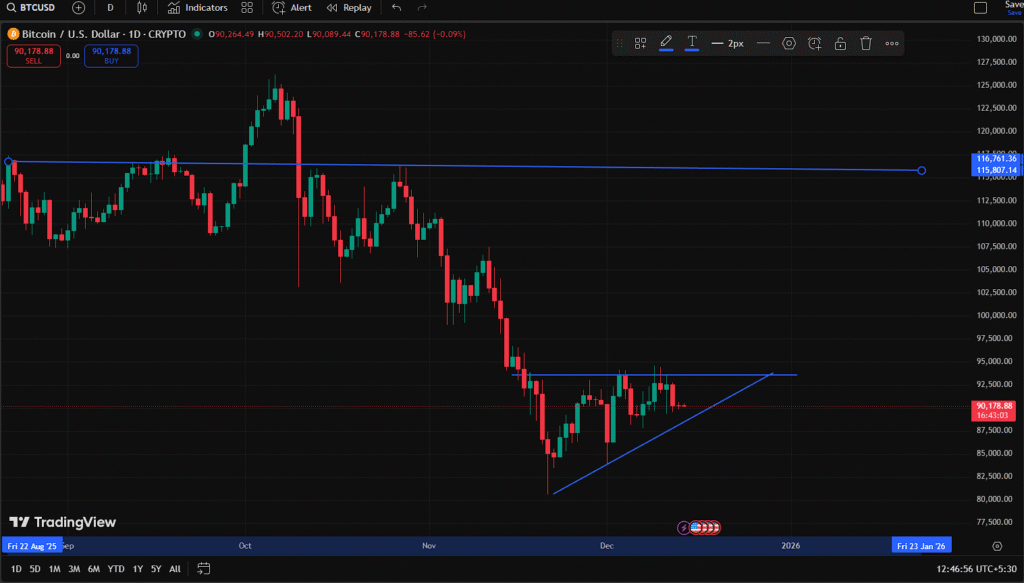
Bitcoin (BTCUSD) daily chart showing correction phase and consolidation pattern.
Deep Dive into Support, Resistance, and Market Psychology
One of the most important elements visible on the Bitcoin chart is the clear resistance zone at higher levels. This zone previously acted as support, but once broken, it turned into a strong ceiling. In technical analysis, this behavior is common and powerful. When price fails to reclaim such a level, it signals hesitation and lack of confidence among buyers.
On the downside, Bitcoin has formed a temporary support zone after a steep fall. This area is where buyers have stepped in repeatedly, preventing further collapse. The presence of multiple wicks and small-bodied candles around this zone suggests accumulation rather than panic selling. In simple terms, smart money may be buying quietly while emotions remain muted.
The chart also shows a rising trendline from recent lows, forming a triangular structure. This pattern often represents indecision. Neither bulls nor bears have full control. Instead, the market is waiting for a trigger — such as macroeconomic news, institutional activity, or regulatory clarity.
Historically, Bitcoin has spent significant time in such ranges before making powerful moves. Long-term investors often see this as a test of patience. Short-term traders see risk. Emotionally, this phase separates disciplined participants from impulsive ones.
Quotes from experienced traders often highlight this stage as “the silent phase before volatility.” While the price may look boring, decisions made here shape the next trend.
Fear, Hope, and the Role of Long-Term Believers
Bitcoin is more than a trading asset; it is a belief system for millions. When price drops sharply, fear dominates headlines. When it rises, hope returns instantly. The current price action reflects a battle between these two emotions.
Long-term holders, often called “strong hands,” usually remain calm during such phases. They understand that Bitcoin has historically moved in cycles — rapid growth followed by deep corrections, and then long periods of rebuilding. The present structure fits well into that historical rhythm.
At the same time, new participants often feel uncertain. Seeing price fail to reclaim key levels creates doubt. Social media sentiment becomes divided. Some predict doom, others predict explosive rallies. The truth often lies somewhere in between.
Fundamentally, Bitcoin continues to attract institutional interest, and its limited supply remains unchanged. However, price does not move on fundamentals alone. Liquidity, interest rates, and global risk appetite play crucial roles. Until confidence returns at higher levels, Bitcoin may continue consolidating.
This phase teaches an important lesson: markets reward patience, not emotions. Those who chase price often suffer, while those who wait for confirmation survive longer.
What the Bitcoin Chart Suggests About the Road Ahead

Looking ahead, the Bitcoin chart suggests that a decisive move is approaching. The tightening price range indicates that volatility is building beneath the surface. A breakout above resistance could restore confidence and invite fresh buying interest. Such a move would signal that buyers are back in control.
On the other hand, failure to hold the current support zone could trigger another wave of selling. This would test the patience of long-term holders and possibly create panic among short-term traders. However, even such a move may not necessarily mean the end of Bitcoin’s story — only another chapter in its long journey.
For investors, the key lies in risk management and clarity. Blind optimism can be dangerous, but so can excessive fear. The chart does not predict the future; it reflects probability. Right now, probability suggests caution, preparation, and emotional control.
Bitcoin has always rewarded those who respect the process. Whether the next move is up or down, it will reshape sentiment once again. Until then, the market waits — quietly, patiently, and decisively.
Disclaimer: This article is for educational and informational purposes only. It does not constitute financial advice or investment recommendations. Cryptocurrency markets are highly volatile, and readers should conduct their own research or consult a qualified financial advisor before making any investment decisions.