Home Blog Page 13

Trump Demands Unconditional Surrender from Iran Amid Escalating Tensions

8

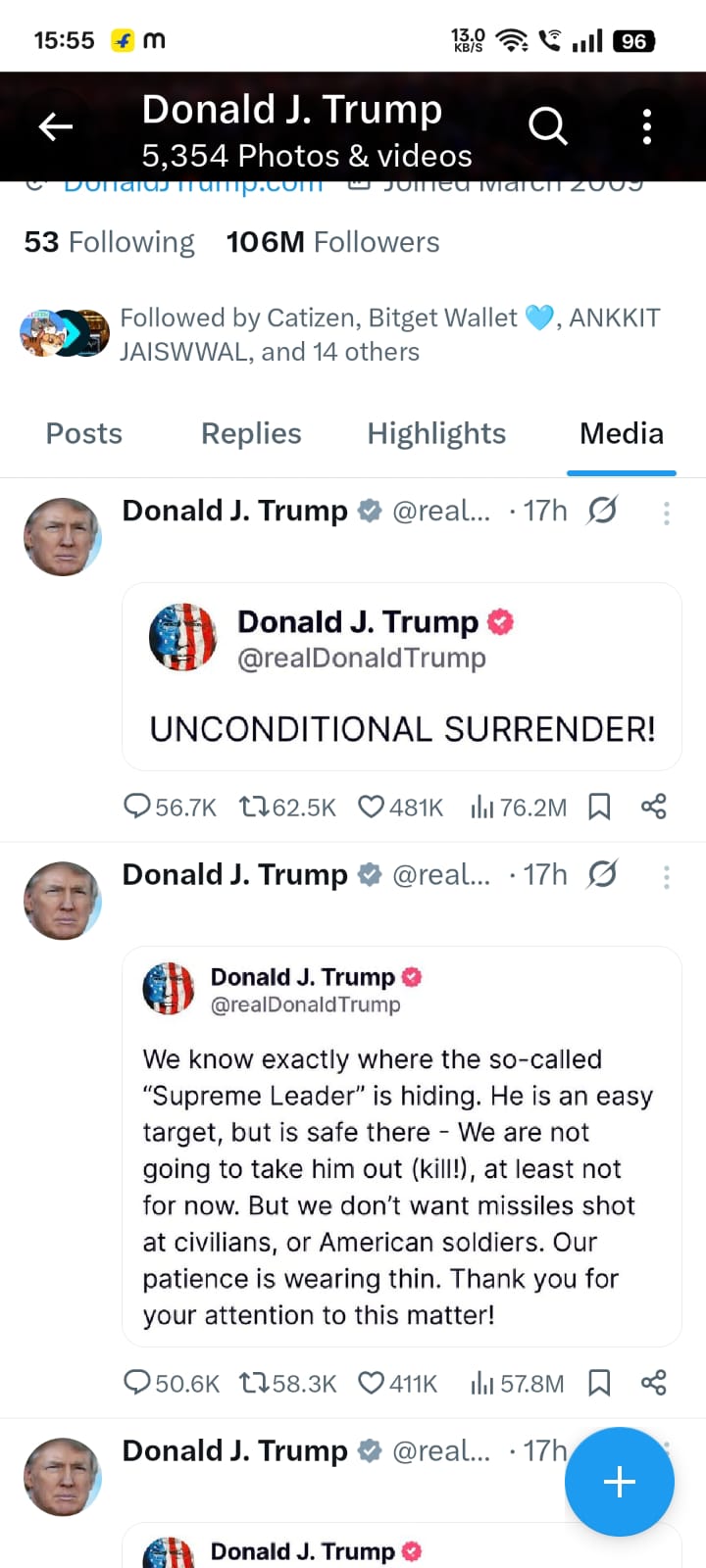
In a series of bold statements posted on X earlier today, former President Donald J. Trump has escalated his rhetoric against Iran, demanding an “unconditional surrender” amid the ongoing conflict with Israel. The posts, timestamped approximately 17 hours ago, reflect a dramatic shift in tone as tensions in the Middle East reach a boiling point.

A Call for Surrender

Trump’s first post, captioned simply “UNCONDITIONAL SURRENDER!”, garnered significant attention, amassing over 56.7K likes, 62.5K retweets, and 481K loves within hours. The all-caps declaration signals a hardline stance, aligning with his recent support for Israel’s military actions against Iran, which began with strikes on June 13, 2025.

Targeting Iran’s Leadership

In a follow-up post, Trump revealed precise knowledge of the whereabouts of Iran’s Supreme Leader, Ayatollah Ali Khamenei, stating, “We know exactly where the so-called ‘Supreme Leader’ is hiding. He is an easy target, but is safe there – We are not going to take him out (kill!), at least not for now.” This statement suggests a strategic pause, possibly to avoid civilian casualties or American military involvement, though he added, “But we don’t want missiles shot at civilians, or American soldiers. Our patience is wearing thin. Thank you for your attention to this matter!” The post, with 50.6K likes and 58.3K retweets, underscores a delicate balance between threat and restraint.

Context of the Conflict

The statements come in the wake of Israel’s recent airstrikes on Iran’s nuclear and military facilities, which Trump has publicly praised as “excellent” and “very successful” on Truth Social. Reports indicate that Trump cut short a G7 summit in Canada on June 16 to address the crisis, holding a National Security Council meeting to discuss potential U.S. involvement, including the use of “bunker buster” bombs against Iran’s Fordo nuclear site. His veto of an Israeli proposal to assassinate Khamenei, citing no American casualties, adds complexity to his position.

Public Reaction

The X posts have ignited a firestorm of reactions. Supporters laud Trump’s assertive leadership, with some interpreting his ultimatum as a masterful diplomatic maneuver. Critics, however, warn of the risks of escalating a regional war, pointing to his earlier promises of an “America First” anti-war policy. The high engagement—over 57.8M impressions combined—highlights the polarizing nature of his stance.

What’s Next?

As the international community watches closely, Trump’s latest posts suggest a potential turning point. Will Iran respond to the demand for surrender, or will this rhetoric push the conflict further? The U.S. and its allies await Iran’s next move, while Trump’s influence on the global stage remains a focal point.

Stay tuned for updates as this story develops.

SEBI Cracks Down on Sanjiv Bhasin, 11 Others for Market Manipulation; ₹11.37 Crore in Gains Frozen

6

Mumbai | June 17, 2025 — The Securities and Exchange Board of India (SEBI) has taken stringent action against well-known market commentator and former IIFL Securities director, Sanjiv Bhasin, along with 11 associates, for allegedly executing a coordinated scheme of manipulative trading. In its interim order, SEBI has restricted all twelve individuals from engaging in securities transactions and ordered the impoundment of ill-gotten gains totaling ₹11.37 crore.

According to SEBI’s detailed 149-page report, Bhasin is accused of purchasing stocks through accounts tied to him or his relatives—such as Venus Portfolios, Gemini Portfolios, and HB Stockholdings—just before publicly recommending the same stocks on popular television channels like CNBC Awaaz, Zee Business, and ET Now, as well as through IIFL’s Telegram channel.

Once these televised recommendations caused stock prices to rise, Bhasin allegedly offloaded his positions, reaping substantial profits—often directly contradicting the buy advice he had just issued to the public.

SEBI’s investigation, which spanned January 2020 to June 2024, uncovered a pattern of trades funneled through RRB Master Securities, operated by Bhasin’s relatives. Call recordings and WhatsApp messages reviewed by the regulator further confirmed his hands-on involvement in orchestrating trades and coordinating with brokers just ahead of his media appearances.

Case in Point

One illustrative incident occurred on January 11, 2022, when Bhasin endorsed L&T Technology Services live on Zee Business. Prior to the recommendation, he had accumulated 3,800 shares via futures at ₹5,641.8 and exited his position shortly after the TV appearance at ₹5,677.79—netting a profit of ₹1.36 lakh.

In another instance dated February 7, 2024, Bhasin pushed Parag Milk Foods as a “special stock pick” with a target of ₹300. However, SEBI discovered that he had already bought 51,500 shares earlier that day and sold them post-recommendation at ₹235.45, securing an estimated gain of ₹8.4 lakh.

Regulatory Breach and Ethical Concerns

SEBI noted that although IIFL Securities is registered as a research analyst and investment adviser, Bhasin himself was never individually registered under either category—raising concerns over regulatory violations and investor deception.

“Retail investors likely acted on his televised advice, unaware that he was simultaneously exiting those very trades,” SEBI’s order said. “Such conduct severely undermines market integrity.”

Pending a final ruling, SEBI has barred all 12 individuals from participating in the securities market and provided them with 21 days to respond or request a hearing.

IIFL’s Response

IIFL Securities issued a clarification distancing itself from the controversy, stating that Bhasin was only a contractual consultant until June 2024. “His association ended prematurely on June 17, 2024, due to health concerns,” the company said, adding that Bhasin was never part of its Board or any affiliate governance structure.

Legal Outlook and Industry Implications

Legal experts suggest that Bhasin’s team may challenge SEBI’s conclusions, possibly arguing that his TV appearances were informal commentary rather than regulated investment advice. However, given the volume of evidence—including transaction timing, call logs, and message trails—experts believe such defenses may face an uphill battle, similar to the precedent set in the Hemant Ghai case.

Nirali Mehta, a partner at Mindspright Legal, emphasized that SEBI’s action marks a shift in enforcement priorities. “This sends a strong signal—public visibility does not exempt one from accountability,” she said. “Even informal platforms like Telegram or WhatsApp are now under SEBI’s regulatory radar.”

She added that the media may also face future compliance obligations, including mandatory conflict-of-interest disclosures by on-air experts.

Broader Market Impact

While no action has been taken against the television networks involved, the episode may catalyze stronger scrutiny of financial influencers and media commentators. Observers expect a rise in due diligence and content transparency, aiming to safeguard retail investors from manipulative practices disguised as expert opinions.

U.S. Retail Sales Drop 0.9% in May 2025: A Deep Dive into Consumer Spending Trends and Market Impacts

June 17, 2025, 07:47 PM IST – The U.S. Census Bureau released its Advance Monthly Sales for Retail and Food Services report for May 2025, revealing a 0.9% (±0.5%) decline in sales to $715.4 billion compared to April. Despite this monthly dip, sales are up 3.3% (±0.5%) from May 2024, offering a mixed signal for investors. With global tensions—such as China’s evacuation of citizens from Iran and Israel amid escalating conflict—adding uncertainty, what does this data mean for the U.S. economy, consumer behavior, and stock market opportunities? Let’s break it down.

Overview of the Retail Sales Data

The U.S. Census Bureau’s report, released on June 17, 2025, provides an early estimate of retail and food services sales for May 2025, adjusted for seasonal variations, holidays, and trading-day differences, but not for price changes. Total sales reached $715.4 billion, marking a 0.9% drop from April 2025’s figures. However, the year-over-year comparison shows growth, with sales increasing 3.3% from May 2024. Additionally, the three-month period from March to May 2025 saw a 4.5% (±0.4%) rise compared to the same period last year, indicating underlying resilience in consumer spending despite the monthly decline.

Retail trade sales specifically mirrored the overall trend, falling 0.9% (±0.5%) from April 2025 but rising 3.0% (±0.5%) from May 2024. A notable revision also emerged: the March-to-April 2025 percent change was adjusted from a 0.1% gain to a 0.1% (±0.2%) decline, reflecting a more cautious consumer spending pattern than initially reported.

Sector Performance: Winners and Losers

The report highlights significant variation across retail sectors, offering insights into shifting consumer priorities:

  • Nonstore Retailers (E-commerce): This sector shone brightly, with sales up 8.3% (±1.4%) year-over-year and a modest 0.9% month-over-month increase. The continued growth of online shopping underscores a structural shift in consumer behavior, accelerated by convenience and technological advancements.
  • Health and Personal Care Stores: Up 7.7% from May 2024, this sector reflects steady demand for essentials like pharmaceuticals and personal care products, a trend often resilient during economic uncertainty.
  • Food Services and Drinking Places: Sales rose 5.3% (±1.8%) year-over-year, though they dipped 0.9% from April 2025. This suggests dining out remains a priority for many, even as monthly spending fluctuates.
  • Motor Vehicle and Parts Dealers: This sector saw the steepest decline, dropping 3.9% from April 2025, though sales are still up 2.5% from May 2024. High interest rates, elevated vehicle prices, and geopolitical uncertainty may be curbing big-ticket purchases.
  • Electronics and Appliance Stores: Sales fell 2.7% month-over-month, despite a 2.3% year-over-year increase, indicating potential softness in discretionary tech spending.
  • Gasoline Stations: A 2.0% monthly decline reflects fluctuating fuel prices, though sales are up 6.9% from last year, likely tied to broader energy market dynamics.
  • Clothing and Accessories Stores: A modest 0.8% month-over-month gain and 3.7% year-over-year growth suggest cautious optimism in fashion spending, though growth remains tepid.
  • General Merchandise Stores: Sales edged up 0.1% from April but grew 2.2% year-over-year. Department stores within this category, however, fell 0.4% month-over-month and 2.8% year-over-year, signaling ongoing challenges for traditional retail.

Broader Trends: Quarterly and Exclusions

Excluding motor vehicle and parts dealers, total sales were down 0.3% from April but up 3.5% from May 2024. When excluding gasoline stations as well, sales dropped 0.8% month-over-month but rose 4.1% year-over-year. These exclusions highlight that core retail spending remains relatively robust, despite headwinds in specific sectors like autos and fuel.

The March-to-May 2025 period’s 4.5% growth compared to the same period in 2024 further underscores that consumer spending, which accounts for roughly two-thirds of U.S. GDP’s personal consumption expenditures (per the Bureau of Economic Analysis), is holding up. However, the monthly decline raises questions about whether this growth can be sustained amid rising economic and geopolitical pressures.

Methodology and Reliability of the Data

The Census Bureau’s advance estimates are derived from a subsample of approximately 4,800 retail and food services firms, selected via stratified random sampling from a larger pool of over three million firms. Sales data are weighted and benchmarked to represent the entire retail universe, using a link relative estimator that multiplies the current-to-previous month sales ratio by the prior month’s preliminary estimate. For nonrespondents with significant influence, sales may be imputed based on historical performance, though imputation is limited to maintain accuracy.

The report includes measures of sampling variability, with a median coefficient of variation (CV) of 0.9% for total sales, indicating reliable estimates. The margin of sampling error for the 0.9% monthly decline is ±0.5%, meaning the 90% confidence interval ranges from -1.4% to -0.4%, confirming the decline is statistically significant. Nonsampling errors (e.g., nonresponse, coding mistakes) are minimized through quality control, though they remain a factor. The Census Bureau notes that weather events like Hurricanes Helene and Milton may have impacted data collection, with further details available in their FAQs.

Economic Context: Geopolitical and Domestic Factors

The retail sales data comes at a time of heightened global uncertainty. China’s evacuation of citizens from Iran and Israel amid escalating conflict, now in its fifth day, is contributing to market volatility. Such geopolitical tensions often lead to a stronger U.S. dollar as a safe-haven asset, which can dampen consumer confidence and discretionary spending in the U.S. Additionally, domestic factors like high interest rates (set by the Federal Reserve to combat inflation) and elevated prices for big-ticket items like vehicles are likely contributing to the 3.9% drop in motor vehicle sales.

On the flip side, the 8.3% growth in nonstore retail sales reflects a structural shift toward e-commerce, a trend that has persisted since the pandemic. This shift benefits companies like Amazon and Shopify, while traditional retailers like department stores (down 2.8% year-over-year) continue to struggle. The resilience in health and personal care spending (up 7.7%) and food services (up 5.3%) suggests consumers are prioritizing essentials and experiences, a common pattern during uncertain times.

Market Implications: Sector Winners and Losers

For investors, this retail sales report offers several actionable insights:

  • E-commerce Stocks: The 8.3% year-over-year growth in nonstore retail sales is a boon for e-commerce giants. Amazon ($AMZN) and Shopify ($SHOP) are well-positioned to capitalize on this trend, especially as online shopping continues to gain market share. Investors might also look at smaller e-commerce players or logistics firms like FedEx ($FDX) that support online retail.
  • Automotive Sector: The 3.9% monthly drop in motor vehicle sales could pressure automakers like Ford ($F) and General Motors ($GM). High interest rates and economic uncertainty may delay purchases, potentially leading to inventory buildup and margin compression for these companies.
  • Discretionary Retail: Sectors like electronics (-2.7% month-over-month) and department stores (-2.8% year-over-year) face headwinds. Companies like Best Buy ($BBY) and Macy’s ($M) may see softer demand as consumers tighten budgets.
  • Essentials and Experiences: Health and personal care stores (up 7.7%) and food services (up 5.3%) show resilience. Stocks like Walgreens ($WBA) and restaurant chains like Darden Restaurants ($DRI) could benefit from steady consumer demand in these areas.
  • Energy and Fuel: Gasoline stations’ 2.0% monthly decline but 6.9% yearly gain reflects energy market volatility. Investors in oil majors like ExxonMobil ($XOM) should monitor geopolitical developments, as Middle East tensions could drive fuel prices higher.

Broader Economic Outlook

Retail and food services sales are a key component of consumer spending, which drives roughly two-thirds of U.S. GDP. The 4.5% growth for the March-to-May 2025 period compared to last year suggests the U.S. economy remains on solid footing, but the 0.9% monthly decline signals potential cracks. If consumer confidence continues to waver—due to geopolitical risks, high interest rates, or inflationary pressures—discretionary sectors could face further challenges.

The Census Bureau’s next report, covering June 2025 data, will be released on July 17, 2025, at 8:30 AM EDT. Investors should also keep an eye on related indicators, such as the Quarterly Services Survey (QSS), which covers revenue trends for service industries and was last released on June 12, 2025. Historical data from the QSS, available on the Census Bureau’s website, can provide further context on consumer spending patterns.

Investor Takeaways and Strategies

  • Growth Opportunities: Focus on e-commerce and health sectors. Stocks like $AMZN, $SHOP, and $WBA could see gains as consumers prioritize online shopping and essentials.
  • Caution Areas: Avoid heavy exposure to discretionary sectors like autos ($F, $GM) and department stores ($M), which may face prolonged weakness.
  • Geopolitical Watch: Monitor Middle East tensions, as escalation could spike oil prices (benefiting $XOM) but further dampen consumer confidence.
  • Data Tracking: Use tools like the FRED Mobile App (from the Federal Reserve Bank of St. Louis) to stay updated on economic indicators, including the Census Bureau’s 13 key metrics.

Disclaimer: This content is for educational purposes only and does not constitute financial advice. Investing involves risks, and past performance does not guarantee future results. Always conduct your own research and consult a financial advisor before making decisions.

📰 NASDAQ Tech 100 Analysis: Index Climbs Amid Volatility, But Faces Resistance Near Upper Bollinger Band

📅 June 17, 2025 | 19:08 IST

The US Tech 100 Cash Index (NDX), which reflects the performance of leading technology stocks including giants like Apple, Microsoft, and NVIDIA, closed at 21,837.6 on June 17, 2025—up +57.1 points (+0.26%). This modest gain reflects investor resilience despite global uncertainties and ongoing sector rotation.


🔍 Technical Analysis Breakdown

1. Price Action & Bollinger Bands

  • Current Price: 21,837.6
  • Bollinger Bands (20 SMA, 2 STD):
    • Upper Band: 22,046.2
    • Middle Band (20 SMA): 21,611.7
    • Lower Band: 21,177.3

The index is currently trading near the upper Bollinger Band, indicating a potential overbought condition in the short term. Historically, touching or nearing this upper band often precedes a pullback or consolidation. However, it may also signal continued momentum if accompanied by strong volume.


2. Volume Profile

  • Current Volume: 74.81K

Volume has been relatively average, not showing any major spikes or sell-offs. This neutral volume level supports the slow and steady upward trend but also suggests lack of aggressive buying at current levels.


3. RSI (Relative Strength Index)

  • RSI 14: 62.11 (Yellow MA: 62.61)

An RSI above 60 is bullish but not in the overbought zone (which is typically above 70). The RSI appears to have flattened, indicating that momentum is slowing slightly. However, there’s no bearish divergence yet, so the uptrend remains intact for now.


📅 Medium-Term Trend Analysis

Looking at the 1D chart:

  • The strong uptrend since April 2025 continues, marking a V-shaped recovery after a March correction.
  • The price has formed higher highs and higher lows, supporting a bullish continuation pattern.
  • However, repeated failure to break above 22,000 decisively suggests strong resistance in this zone.

🌎 Macro Sentiment Impacting the Index

  • Geopolitical Tensions: Markets remain cautious amid Middle East tensions (Iran-Israel conflict), which continue to impact investor sentiment and volatility.
  • Fed Policy Outlook: Hints at a neutral or dovish stance from the Fed could support growth stocks and tech-heavy indices like the NASDAQ 100.
  • AI Boom & Tech Earnings: Mega-cap tech firms driving the index have posted strong earnings, especially those linked to AI, which remains a key driver.

🧠 What to Watch Next?

  1. Resistance Zone: 22,000–22,050 — a breakout above could lead to a sharp rally toward 22,500+.
  2. Support Levels: 21,600 (20-day SMA) and 21,177 (Lower Bollinger Band).
  3. RSI Levels: Watch for a break above 70 (bullish) or below 50 (bearish).
  4. Volume Surge: Increased buying volume on green candles may confirm breakout attempts.

📊 Conclusion

The NASDAQ Tech 100 is showing healthy upward movement but is facing stiff resistance near all-time highs. With indicators pointing to mild bullishness, traders and investors should stay cautious near resistance and look for confirmation via volume or RSI before chasing a breakout.

If global macroeconomic stability persists and earnings continue to impress, the tech rally may still have legs. However, a correction or sideways consolidation is also a strong possibility in the short term.


🔁 Stay tuned to StockMarketRulers.com for daily updates, expert analysis, and real-time market insights

JPMorgan’s Sapphire Reserve Fee Surges to $795: Smart Strategy or Luxury Overreach?

0

📅 June 17, 2025 | 🕒 06:49 PM IST
📍 New York / Global Markets

In a bold move targeting elite spenders, JPMorgan Chase ($JPM) has raised the annual fee of its flagship Sapphire Reserve credit card to $795—a steep 45% hike from its current $550. The overhaul, effective June 23, comes with a suite of premium travel, dining, and entertainment benefits designed to woo high-income users even amid rising global tensions and market volatility.

💼 What’s New in the Sapphire Reserve?

Despite the fee spike, JPMorgan is offering over $2,700 in annual perks, aiming to justify the cost with premium value-adds:

  • ✈️ Travel Rewards: Points now double in value on select redemptions; includes a $500 credit at JPMorgan luxury hotels.
  • 🍽️ Dining & Entertainment:
    • $300 dining credit at exclusive Sapphire restaurants.
    • $300 StubHub/Viagogo credit.
    • Free Apple TV+ and Apple Music (valued at $250).
  • 🏨 Elite Status Access: Spend $75,000+ annually to unlock top-tier loyalty status with Southwest Airlines and IHG Hotels.

The bank also unveiled a Sapphire Reserve Business Card—matching the $795 fee—with perks for entrepreneurs including credits for ZipRecruiter and Google Workspace, squarely challenging American Express Platinum.


📉 Market Reaction: Luxury Card Wars Heat Up

The move intensifies competition in the high-end credit card space, placing JPMorgan head-to-head with Amex ($AXP) and Capital One ($COF). But experts warn the price hike could backfire.

“Premium cards are becoming more exclusive, which helps reduce lounge overcrowding—but it also risks alienating aspirational users,” says Ted Rossman, Senior Analyst at Bankrate.

As global unrest—such as China’s evacuations in Iran and Israel—sways markets, affluent consumers may rethink splurging on luxury travel and dining. That could affect usage in Sapphire Reserve’s strongest categories, potentially denting JPMorgan’s credit card revenue.


📈 Investor Insights: What to Watch

  • JPM Stock: Keep an eye on $JPM for potential swings based on cardholder retention and spending trends. A drop in renewals could hurt earnings.
  • Amex & Capital One: Expect $AXP and $COF to respond with benefit boosts or fee restructures in the coming months.
  • Luxury Spending Trends: Geopolitical tensions may cool demand for high-end travel and dining, influencing overall card usage metrics.

🧠 Bottom Line

JPMorgan’s $795 Sapphire Reserve could redefine luxury plastic—if high spenders bite. But in a time of financial caution and market stress, will exclusivity translate to profitability?

Only time—and spending data—will tell.


Disclaimer: This article is for informational purposes only and not intended as investment advice. Always conduct your own research or consult with a qualified advisor before making financial decisions.

Bitcoin Hits $105K: Is a Pullback Looming Amid Geopolitical Tensions?

3

June 17, 2025 – Bitcoin (BTC) is trading at $105,872, but with geopolitical tensions flaring in the Middle East, including China’s evacuation of citizens from Iran and Israel, is this rally sustainable? Let’s break down the charts and market signals for traders and investors.

In-Depth Chart Analysis: BTC/USD (Daily)

  • Bollinger Bands (BB): BTC has been riding the upper Bollinger Band since late April, hitting a high of $112,000 on June 10 before pulling back to $105,872. The upper band at $109,872 suggests overextension—historical patterns show BTC often retraces to the 20-day SMA ($102,016) after such moves. A break below the middle band could target the lower band at $96,000, a key support level.
  • 20-Day Simple Moving Average (SMA): The 20-day SMA at $102,016 has acted as dynamic support during this uptrend (e.g., early May bounce). It’s a critical level to watch—if BTC dips below this, bearish momentum could accelerate toward $96,000.
  • Relative Strength Index (RSI): RSI is at 53.17, down from 70 in early June, indicating cooling momentum. This drop from overbought territory (above 70) suggests a potential consolidation phase. If RSI falls below 50, it could confirm a bearish shift; conversely, a rebound above 60 might signal renewed bullish strength.
  • Volume Trends: A recent volume spike on red candles (e.g., June 10-12) shows selling pressure, likely driven by profit-taking or geopolitical uncertainty. Declining volume on the latest green candles hints at weakening buying conviction.

Geopolitical Context: Impact on BTC

China’s evacuation of citizens from Iran and Israel, alongside its ceasefire push, adds uncertainty to global markets. Bitcoin often acts as a safe-haven asset during geopolitical unrest, but a stronger USD (a flight-to-safety move) could cap BTC’s upside. If tensions escalate, expect volatility spikes—potentially pushing BTC toward $96,000 if bearish pressure mounts.

Today’s Outlook for BTC

BTC faces a pivotal moment. A break below $102,016 (20-day SMA) could trigger a deeper correction to $96,000, while a push above $108,000 might retest the recent high of $112,000. RSI and volume trends will be key—watch for a spike in buying volume or an RSI rebound above 60 to confirm bullish momentum.

Key Levels to Monitor

  • Support: $102,016 (20-day SMA), $96,000 (lower Bollinger Band).
  • Resistance: $108,000, $112,000 (recent high).
  • Trade Idea: Consider a short if BTC breaks below $102,000 with high volume, targeting $96,000. For longs, wait for a confirmed bounce above $108,000.

Disclaimer: This content is for educational purposes only and does not constitute financial advice. Cryptocurrency trading carries significant risk due to market volatility. Always conduct your own research and consult a financial advisor before making investment decisions.

China Evacuates Citizens from Iran and Israel, Calls for Immediate Ceasefire

4

Beijing, June 17, 2025 – As the conflict between Iran and Israel intensifies, entering its fifth day, China has launched urgent evacuation efforts for its citizens in both nations while pressing for a ceasefire to halt the escalating violence. The Chinese foreign ministry, alongside its embassies and consulates, is actively facilitating the safe departure of Chinese nationals, urging them to leave via land border crossings due to disrupted air travel and heightened security risks.

Evacuation Efforts Amid Rising Tensions

The Chinese embassy in Iran has issued critical advisories, warning of the closure of Iran’s airspace and the potential for land border crossings to follow suit. Citizens are advised to exit through border points to Turkey, Armenia, or Turkmenistan, with travel distances from Tehran ranging between 760 and 910 kilometers (472 to 565 miles). Similarly, in Israel, the embassy is assisting citizens to cross into Jordan, as regional instability, including the risk of missile attacks, continues to grow.

The foreign ministry has not disclosed specific details of the evacuation operations but emphasized that support has been ongoing since the conflict erupted. These efforts reflect China’s priority to ensure the safety of its citizens amid a rapidly deteriorating security situation in the Middle East.

Beijing’s Push for Diplomacy

In parallel with its evacuation measures, China is intensifying diplomatic efforts to de-escalate the conflict. Beijing has repeatedly called for both Iran and Israel to exercise restraint and work toward an immediate ceasefire. The Chinese government has engaged with regional mediators, including Qatar, Saudi Arabia, and Oman, urging them to leverage their influence—particularly with U.S. President Donald Trump—to press Israel for a cessation of hostilities.

Iran has signaled flexibility in nuclear negotiations as a potential incentive for a ceasefire, a proposal China supports as part of broader diplomatic efforts to cool tensions. Beijing’s stance underscores its long-standing policy of promoting dialogue over military action in the Middle East, advocating for solutions that prevent further escalation and regional instability.

A Call for Global Cooperation

China’s foreign ministry emphasized that military actions will not resolve the crisis and could lead to broader consequences for the region. By engaging with key stakeholders and offering humanitarian support to its citizens, China is positioning itself as a mediator and advocate for peace in this volatile conflict.

As the situation evolves, the Chinese government continues to monitor developments closely, urging its citizens to heed travel advisories and calling on all parties to prioritize diplomacy to restore stability in the region.

BSE Sensex and Nifty 50 Surge on June 17, 2025: Market Analysis and Trading Insights for Investors

The Indian stock market witnessed a positive movement on June 17, 2025, with the BSE Sensex and Nifty 50 indices showing modest gains during the 1-hour trading session. The BSE Sensex closed at 81,582.58, up by 12.08 points (+0.01%), while the Nifty 50 settled at 24,887.25, gaining 8.45 points (+0.03%). This upward trend, albeit slight, reflects cautious optimism among investors amidst fluctuating market conditions.

Market Performance Overview

The BSE Sensex opened at 81,569.70 and reached a high of 81,596.35, with a low of 81,559.09 during the session. The index touched a peak of 82,084.66 earlier in the period, showing some volatility as it later corrected. The 20-period Simple Moving Average (SMA) for the Sensex stood at 81,438.43, indicating that the index was trading above its short-term average, a bullish signal for traders. The Relative Strength Index (RSI) on a 14-period close was at 46.55, suggesting the market was in a neutral zone, neither overbought nor oversold.

Similarly, the Nifty 50 started at 24,878.90, hitting a high of 24,890.70 and a low of 24,866.65. The index reached a 20-period SMA of 24,821.67, and its RSI was at 49.02, also indicating a balanced market sentiment. The trading volume for the Nifty 50 was reported at 7.66 million shares, reflecting moderate activity.

Technical Analysis and Trading Signals

Both indices displayed a “Buy” signal on the charts, as indicated by TradingView’s analysis. The BSE Sensex’s candlestick patterns showed a mix of bullish and bearish movements, with a significant drop earlier in the session followed by a recovery. The Nifty 50 mirrored this trend, with a sharp decline followed by a rebound, supported by its 20-period SMA acting as a key support level.

The RSI for both indices hovering around the mid-40s suggests that the market has room for further movement in either direction. Traders might look for a breakout above the recent highs of 82,084.66 (Sensex) and 25,031.92 (Nifty) to confirm a stronger bullish trend. Conversely, a drop below the 20-period SMA could signal a potential bearish reversal.

What This Means for Investors

The slight uptick in both indices indicates cautious optimism in the market, likely driven by positive investor sentiment and sector-specific developments. However, the neutral RSI and recent volatility suggest that traders should remain vigilant. Short-term investors might consider taking positions based on the “Buy” signal, while long-term investors may want to wait for a clearer trend confirmation.

Standard Disclaimer

The information provided in this blog is for informational purposes only and should not be considered as financial advice. Stock market investments are subject to risks, and past performance is not indicative of future results. Always conduct your own research or consult with a certified financial advisor before making investment decisions. The author and publisher are not responsible for any financial losses incurred based on the information presented.

Trump’s Bitcoin Bet: How a $2.5B Deal Could Shake Up Your Finances

A Game-Changing Move in the Crypto Space

On June 16, 2025, Trump Media & Technology Group (TMTG), the social media company led by President Donald Trump, announced a massive $2.5 billion investment in Bitcoin, marking a significant shift in corporate treasury strategy. The funds, raised through a combination of $1.5 billion in share sales (approximately 58 million shares) and $1 billion in convertible bonds, will be used to establish a Bitcoin treasury. This bold move could have far-reaching effects on everyone’s finances, even for those who don’t own cryptocurrency.

Bitcoin as a New ‘Safe Haven’ Asset

Traditionally, U.S. Treasury bonds have been the go-to safe investment for institutions, but rising yields and economic uncertainty are prompting a shift. Institutional investors are increasingly turning to Bitcoin as a hedge against market volatility, a trend that TMTG’s investment amplifies. “Trump Media and Technology Group (DJT) isn’t the first to dive into the crypto market,” said Alena Afanaseva, CEO of BeInCrypto. “Earlier this year, on March 10, 2025, Germany’s Deutsche Börse launched cryptocurrency custody and settlement services for institutional clients. More recently, on June 9, 2025, UK-based Anemoi International Ltd. ($AMOI.L) invested 30% of its £900k ($1.2 million) cash reserves into Bitcoin, becoming the first UK company to add it to its treasury.”

This growing acceptance of Bitcoin as a legitimate treasury asset could lead to its inclusion in mainstream portfolios, including retirement funds, potentially reshaping investment strategies for millions.

Ripple Effects on the Broader Economy

The impact of TMTG’s $2.5 billion Bitcoin investment extends beyond the crypto market, influencing broader economic dynamics. Aaron Razon, a personal finance expert at Couponsnake, noted, “This deal could introduce economic uncertainties, affecting interest rates, inflation, and job growth, which in turn impact Americans’ purchasing power and financial stability.” Even if you don’t own DJT stock or Bitcoin, these changes could affect your daily finances through shifts in the cost of goods, borrowing rates, and employment opportunities.

New Opportunities for Earning and Spending

As more companies embrace cryptocurrency, new earning and payment options are likely to emerge. “With crypto becoming integrated into mainstream banking and fintech platforms, even non-investors may encounter its influence through innovative payment methods, financial products, or cultural shifts,” Afanaseva explained. This could mean more opportunities to earn crypto through work or use it for everyday purchases, bridging the gap between traditional finance and digital assets.

Mainstream Crypto Adoption Gains Momentum

For years, Bitcoin was viewed as a speculative, high-risk asset, but its adoption by publicly traded companies like TMTG signals a turning point. By adding Bitcoin to their balance sheets, firms are diversifying their revenue streams, a strategy that could encourage broader acceptance. “Trump Media’s $2.5 billion pivot to Bitcoin adds a layer of volatility to its stock (DJT),” said Dan Buckley, chief analyst at DayTrading.com. “While it may not directly affect those who don’t own the stock or crypto, high-profile companies embracing Bitcoin could accelerate its mainstream acceptance as a corporate treasury asset.”

Conclusion: What This Means for Your Wallet

Trump Media & Technology Group’s $2.5 billion Bitcoin investment is more than just a corporate strategy—it’s a signal of cryptocurrency’s growing role in global finance. From reshaping safe investment options to influencing economic conditions and creating new financial opportunities, this move could impact everyone’s wallet, regardless of their involvement in crypto. As Bitcoin gains legitimacy, staying informed about its effects on the economy will be crucial for navigating the financial landscape in 2025 and beyond.

SRM Entertainment Secures $100M Equity Investment for TRON Treasury Strategy, Appoints Justin Sun as Advisor

A Bold Move into Blockchain Innovation

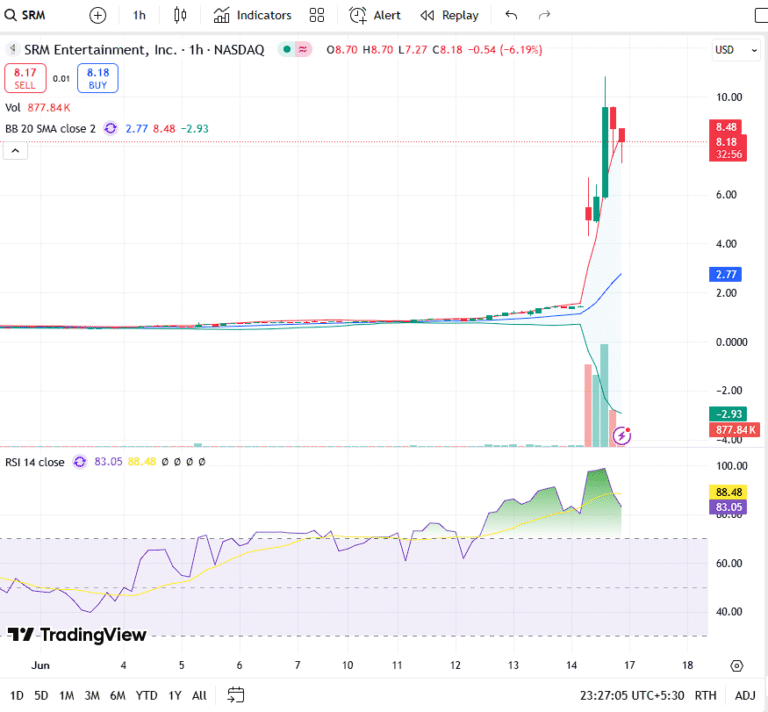
Winter Park, Florida – On June 16, 2025, SRM Entertainment, Inc. (Nasdaq: SRM) announced a transformative $100 million equity investment to launch a TRON Token (TRX) Treasury Strategy, marking a significant step into the blockchain and digital innovation space. Alongside this strategic move, SRM has named Justin Sun, the founder of the TRON blockchain, as an advisor to guide the company’s new direction. This development signals SRM’s ambition to leverage blockchain technology for long-term shareholder value.

Details of the $100M Equity Investment

Under the Securities Purchase Agreement (SPA) with a private investor, SRM will issue 100,000 shares of Series B Convertible Preferred Stock, which can be converted into 200 million shares of common stock at $0.50 per share. Additionally, the deal includes 220 million warrants, allowing the purchase of up to 220 million shares at the same price. If the warrants are fully exercised, the total value of the transaction could reach $210 million. Dominari Securities LLC served as the exclusive placement agent for this offering.

The securities were offered to accredited investors and have not been registered under the Securities Act of 1933, meaning they cannot be sold in the US without SEC registration or an applicable exemption. SRM also revealed plans to rebrand as Tron Inc., reflecting its deepened commitment to blockchain technology.

SRM’s Vision: Building a TRON Treasury Strategy

The $100 million investment will fuel SRM’s TRON Treasury Strategy, which includes a TRX staking program aimed at generating sustainable returns. The company plans to implement a dividend policy once the staking program is successfully rolled out, offering potential benefits to shareholders. This strategy aligns with SRM’s goal of capitalizing on the global adoption of blockchain technology, particularly in the realm of digital payments and financial infrastructure.

Rich Miller, CEO of SRM, expressed enthusiasm about the partnership, stating, “As blockchain technology gains wider adoption globally, TRON has become the industry leader for cross-border settlement in US dollar stablecoin. We are excited to invest in the future of the world’s next-generation financial infrastructure.”

Justin Sun’s Role and TRON’s Global Impact

Justin Sun, the founder of TRON blockchain, brings significant expertise to SRM as an advisor. TRON, launched in 2017, has grown into one of the world’s leading Layer-1 protocols, known for its low fees and fast transaction times compared to competitors like Bitcoin and Ethereum. As of June 15, 2025, TRON hosts approximately 78.7 billion in US dollar stablecoins and supports over 310 million international user accounts, with average daily transactions exceeding $20 billion year-to-date.

Sun highlighted TRON’s role in global finance, saying, “Stablecoins and blockchain are revolutionizing global payments, enabling faster, cheaper, and more transparent transactions. TRON strives to be the protocol of choice for onchain settlement serving mass populations worldwide.”

SRM Entertainment: A Legacy in Entertainment Merchandise

SRM Entertainment has traditionally focused on designing and manufacturing custom merchandise, including toys and souvenirs, for major entertainment venues like Walt Disney Parks, Universal Parks, SeaWorld, Six Flags, and other global attractions. Many of SRM’s products are tied to award-winning, multi-billion-dollar entertainment franchises featured in popular movies and books. This pivot into blockchain represents a bold diversification strategy for the company.

Market Implications and Forward-Looking Statements

The partnership with TRON and the substantial equity investment could position SRM as a key player in the blockchain sector, particularly in the growing market for stablecoin-based cross-border payments. However, the company cautioned that forward-looking statements, such as the potential name change to Tron Inc., the exercise of warrants, and the implementation of a dividend policy, are subject to risks and uncertainties. Investors are encouraged to review SRM’s SEC filings, including its Forms 10-K and 10-Q, for a detailed discussion of potential risks.

Conclusion: A New Era for SRM and TRON

SRM Entertainment’s $100 million equity investment and strategic partnership with TRON blockchain mark a pivotal moment for the company as it ventures into the rapidly evolving world of digital finance. With Justin Sun’s advisory role and TRON’s robust infrastructure, SRM is poised to create long-term value for its shareholders while contributing to the global adoption of blockchain technology. As the company transitions to Tron Inc., investors will be watching closely to see how this bold strategy unfolds.

Crude Oil Prices Plummet as Iran Signals De-escalation Amid Ongoing Israel Conflict

15

Introduction: A Volatile Week for Crude Oil Markets

On June 16, 2025, July WTI crude oil (CLN25) dropped sharply by -2.42 (-3.32%), while July RBOB gasoline (RBN25) fell by -0.0238 (-1.07%). The decline follows a dramatic surge of +5% in crude prices on Sunday night, driven by escalating tensions between Israel and Iran. However, hopes of a contained conflict and minimal damage to Iran’s oil infrastructure led to a steep reversal, with losses accelerating after reports surfaced that Iran is seeking to end hostilities and resume nuclear talks.

Iran-Israel Conflict: A Rollercoaster for Oil Prices

The Israel-Iran conflict, now in its fourth day as of June 16, 2025, has kept global markets on edge. Iran launched multiple waves of drones and missiles over the past 24 hours, while Israel continued its airstrikes on Tehran, targeting senior military officials. Despite the ongoing violence, a report from the Wall Street Journal revealed that Iran has expressed a desire to cease hostilities and return to nuclear negotiations, provided the US refrains from joining the attacks. Iran also communicated to Israel that de-escalation would benefit both parties. However, Israeli Prime Minister Benjamin Netanyahu remains steadfast, vowing to continue the strikes until Iran’s nuclear and ballistic missile programs are dismantled.

The initial spike in crude prices reflected fears of supply disruptions in the Middle East, a region critical to global oil production. Iran, producing 3.3 million barrels per day (bpd) as of April 2025 according to OPEC, is a significant player in the oil market. Yet, the absence of damage to Iran’s oil-exporting infrastructure and the potential for de-escalation have calmed trader concerns, leading to the sharp price drop.

Market Dynamics: OPEC+ Capacity and Global Oil Glut Concerns

The crude oil market is also influenced by broader supply dynamics. OPEC+ members, including Saudi Arabia, have excess capacity that could offset any disruptions in Persian Gulf supplies. The International Energy Agency (IEA) has 1.2 billion barrels in emergency stockpiles, ready to be released if necessary, further limiting the upside for oil prices.

However, concerns about a global oil glut are weighing on prices. On May 31, OPEC+ agreed to increase crude production by 411,000 bpd for July, following a similar hike in June. Saudi Arabia has signaled plans for additional increases of the same magnitude in August and September to capitalize on peak summer demand. This strategy, aimed at punishing overproducing members like Kazakhstan and Iraq, could further depress prices. OPEC+ is gradually reversing a 2-year production cut, aiming to restore 2.2 million bpd by September 2026, later than the initially planned timeline ending in late 2025.

A decline in crude oil stored on tankers offers some bullish support. Vortexa reported that crude oil held on stationary tankers for at least seven days fell by -7.2% week-over-week to 73.97 million barrels in the week ending June 13, indicating reduced oversupply pressure.

Geopolitical and Economic Factors: Trump’s Tariffs and US-China Trade Deal

Global trade uncertainties are also impacting crude prices. On June 11, 2025, President Trump announced plans to impose unilateral tariffs on dozens of US trading partners within one to two weeks, ahead of a July 9 deadline following a 90-day pause. These tariffs could dampen global economic activity and energy demand, exerting downward pressure on oil prices. Conversely, reduced tensions between the US and China provide a glimmer of optimism. Trump confirmed on the same day that a trade deal with China was finalized, potentially reviving the flow of sensitive goods and boosting economic growth, which could support energy demand.

Conclusion: What’s Next for Crude Oil Prices?

The crude oil market remains highly volatile as the Israel-Iran conflict unfolds. While Iran’s willingness to de-escalate and resume nuclear talks has alleviated immediate supply fears, Netanyahu’s unrelenting stance suggests the situation could escalate again. With OPEC+ poised to increase production and global trade uncertainties looming, crude prices face significant headwinds. Investors and traders should stay informed with real-time commodity analysis to navigate these turbulent markets.

AMD Stock Soars: Can It Outshine Nvidia in the AI Boom?

ntroduction: AMD’s Rising Star in the Semiconductor Industry

Advanced Micro Devices (NASDAQ:AMD) is gaining momentum as a strong competitor to Nvidia in the semiconductor space. The latest AMD stock price reflects a 50% increase since its post-Liberation Day low two months ago, signaling growing investor confidence. This article dives into AMD news, the current AMD stock price, and the company’s potential to dominate the AI accelerator market by 2028.

AMD’s Financial Performance: Fueling Investor Confidence

AMD’s Q1 2025 earnings report revealed record revenues of $7.4 billion and a robust gross margin of 54%, showcasing its financial strength. Additionally, a $10 billion partnership with Saudi Arabian HUMAIN has further boosted optimism around AMD stock. These developments highlight AMD’s ability to compete in the high-stakes semiconductor industry.

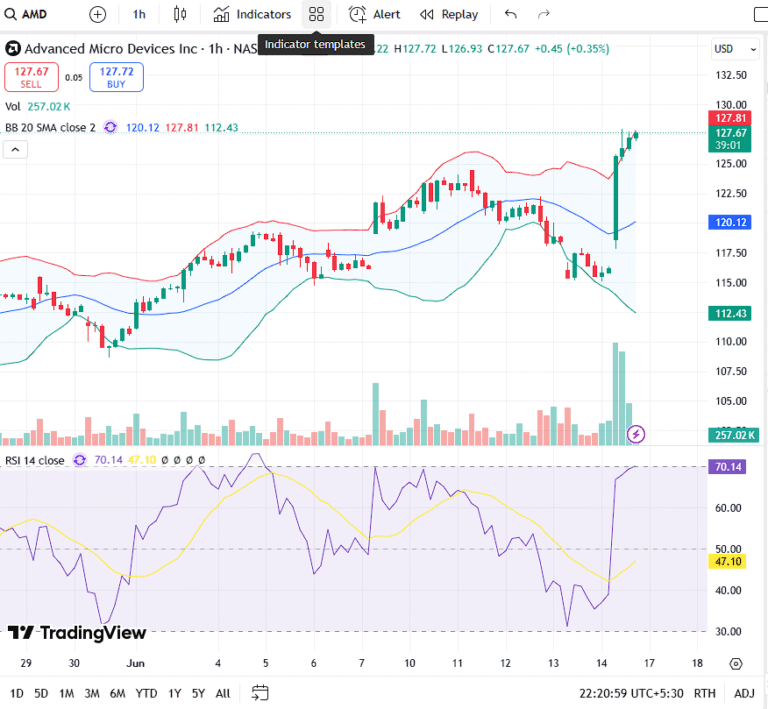
The finance card above shows AMD stock trading at $127.456 on June 16, 2025, up significantly from its previous day’s close of $116.16. The stock has been trending above the 20-period Bollinger Bands Simple Moving Average (SMA) at $121.43, indicating a strong bullish trend. However, the Stochastic Indicator (14) at 70.14 suggests AMD stock may be approaching overbought levels, which could lead to a short-term correction.

The AI Inference Market: A Golden Opportunity for AMD

Recent AMD news highlights its strategic focus on the AI inference market, which is projected to grow at an 80% CAGR, potentially reaching a $500 billion AI accelerator market by 2028, according to top investor Stone Fox Capital. Stone Fox, a 5-star TipRanks investor in the top 4%, believes AMD is well-positioned to capitalize on this growth.

If AMD captures even 10% to 20% of this market, its data center revenues could skyrocket to $50–$100 billion by 2028. This potential makes AMD stock an attractive option for investors looking to ride the AI wave.

Technical Analysis: Decoding AMD Stock Price Trends

The 1-hour chart in the finance card above shows AMD stock breaking through the $127.81 resistance level, peaking at $130.00 before settling at $127.456. A volume spike to 257.02K during this breakout indicates strong buying interest in AMD stock. The price is currently near the upper Bollinger Band, reinforcing the bullish momentum. However, with the Stochastic Indicator nearing overbought territory, investors should watch for a potential pullback to the 20 SMA at $121.43.

Strategic Moves: Why AMD Is a Contender in AI

AMD’s focus on the data center segment is a key driver of its growth. Stone Fox Capital notes that AMD enters mid-2025 with limited data center sales compared to the massive opportunity ahead. The recent launch of the MI355X chip and partnerships with major players like OpenAI, Microsoft, and HUMAIN position AMD to capture a larger share of the AI market. These developments are fueling positive AMD news and investor sentiment.

Risks to Consider: Challenges for AMD Stock

Despite the bullish outlook, AMD faces challenges in its competition with Nvidia, which dominates the AI and data center markets. Macroeconomic factors, such as inflation or supply chain issues, could also impact AMD stock price. Technically, the overbought Stochastic Indicator suggests a potential short-term correction, with key support levels at $121.43 (20 SMA) and $112.43 (recent low).

Conclusion: Is AMD Stock a Buy in 2025?

AMD stock is riding a wave of positive momentum, driven by strong financials, strategic partnerships, and its positioning in the AI inference market. With the potential to generate $50–$100 billion in data center revenues by 2028, AMD stock offers significant growth opportunities. However, investors should remain cautious of short-term technical risks and Nvidia’s dominance.

Amex Platinum Card Updates 2025: What to Expect from the Luxury Credit Card Showdown

2,518

A New Chapter in Premium Credit Card Competition

The battle for luxury credit card supremacy is heating up as American Express and JPMorgan Chase gear up for major updates to their flagship cards in 2025. On June 16, 2025, Amex teased significant enhancements to its Amex Platinum Card, both consumer and business versions, promising a refresh later this year that aims to redefine premium card value. This announcement follows JPMorgan Chase’s reveal of an upcoming overhaul to its Chase Sapphire Reserve, a card that made waves in 2016 with its travel and dining rewards.

Amex Platinum Card: Bigger Benefits on the Horizon

Amex is positioning its Platinum card updates as a game-changer, with Howard Grosfield, President of U.S. Consumer Services at Amex, stating the company will enhance benefits in travel, dining, and lifestyle experiences. The Amex Platinum Card, currently carrying a $695 annual fee, is expected to introduce perks that far exceed this cost, targeting high-net-worth individuals and younger Gen Z cardholders—a demographic that accounted for 75% of new Platinum and Gold cardholders in 2023. With Gen Z’s subscription-savvy mindset, Amex is doubling down on curated experiences, such as exclusive event access and dining credits, to build loyalty.

Chase Sapphire Reserve: A Rival Refresh

JPMorgan Chase isn’t backing down, with its Sapphire Reserve refresh set to challenge Amex’s dominance. The card, known for its 2016 viral launch with a lavish sign-on bonus, currently has a $550 annual fee. However, unconfirmed rumors circulating on X suggest a potential fee hike to $795, which could stir debate among cardholders. Industry experts anticipate both Amex and JPMorgan will roll out expanded perks in travel, dining, and entertainment, such as concert access, to justify any fee increases and attract affluent customers.

Market Reactions and Consumer Sentiment

The market responded positively to the news on June 16, 2025, with Amex (AXP) stock climbing 2.58% to $295.031 and JPMorgan (JPM) rising 2.11% to $270.383 by 10:30 AM EST (8:00 PM IST). Investors seem optimistic about the revenue potential of these updates, but consumer sentiment on platforms like X tells a more nuanced story. Some users express frustration, describing premium cards as “overpriced coupon books” due to complex credit structures and diminishing lounge access benefits, raising concerns about whether the new perks will truly deliver value.

What’s Next for Amex Platinum Cardholders?

The Amex Platinum Card updates, expected to roll out in the fall of 2025, aim to solidify Amex’s lead in the premium card space. With a focus on travel perks, dining credits, and exclusive experiences, the refresh is poised to appeal to both seasoned travelers and younger cardholders seeking lifestyle benefits. Meanwhile, JPMorgan’s Sapphire Reserve update will likely intensify the competition, potentially reshaping the luxury credit card landscape. Cardholders should watch for official announcements to assess whether the new benefits justify any potential fee increases.

Conclusion: A High-Stakes Rivalry

The 2025 updates to the Amex Platinum Card and Chase Sapphire Reserve signal a fierce rivalry that could redefine the premium credit card market. As Amex and JPMorgan vie for dominance, cardholders stand to gain from enhanced perks—but only if the value outweighs the cost. Stay tuned for more details as these updates unfold, and evaluate whether these luxury cards align with your financial goals.

Disclaimer

The information provided in this article is for informational purposes only and does not constitute financial advice. Credit card offers and fees are subject to change, and individual financial decisions carry risks. Readers are advised to conduct their own research or consult with a qualified financial advisor before applying for or using any credit card. The author and the publication are not responsible for any financial decisions or losses resulting from the information provided herein.

Bitcoin Price Today: BTC/USD Analysis and Key Levels to Watch on June 16, 2025

10

Bitcoin Market Update: A Slight Dip Amidst Uptrend

On June 16, 2025, Bitcoin (BTC/USD) closed at $106,629 on Bitstamp, down $82 or 0.08% from the previous session. The cryptocurrency opened at $106,713, reached a high of $107,695, and a low of $106,593 during the trading day. Despite the minor dip, Bitcoin remains in a strong uptrend, reflecting sustained bullish sentiment in the crypto market.

Technical Analysis: Decoding the Chart

Price Action and Bollinger Bands

The 1-hour chart of BTC/USD, plotted with Bollinger Bands (20-period SMA, 2 standard deviations), provides insights into recent price movements. The middle band (20-period SMA) is at $106,110, with the upper band at $107,610 and the lower band at $104,611.

  • Mid-June Decline: On June 13, Bitcoin experienced a sharp drop, falling from around $107,000 to a low near $103,000, briefly touching the lower Bollinger Band at $104,611. This decline indicated a short-term correction, likely driven by profit-taking after a prolonged rally.
  • Recovery and Consolidation: From June 14 to June 16, Bitcoin staged a recovery, climbing back above the 20-period SMA and peaking near $107,695 on June 16. The current price of $106,629 places it just above the 20-period SMA, suggesting a consolidation phase within the broader uptrend.
  • Current Position: The price is testing the 20-period SMA at $106,110 as support, with the upper Bollinger Band at $107,610 acting as immediate resistance. The sustained position above the 20-period SMA indicates that bulls remain in control, though the minor dip suggests caution.

Relative Strength Index (RSI)

The RSI (14-period) on the 1-hour chart is at 53.92, hovering in the neutral zone (between 30 and 70). The RSI peaked at 63.19 earlier on June 16, reflecting the bullish momentum during the recovery phase. It previously dropped to around 40 during the June 13 correction, narrowly avoiding oversold territory (below 30).

  • Interpretation: The current RSI of 53.92 suggests balanced momentum, with neither overbought nor oversold conditions. A move above 60 could signal renewed bullish strength, while a drop below 50 might indicate a return of selling pressure.

Volume Trends

The chart labels the volume as “BTC,” indicating that trading activity is being tracked in Bitcoin units. Volume appears steady, with no significant spikes on June 16. This stability suggests that the current consolidation is not driven by aggressive buying or selling, but rather a wait-and-watch approach among traders.

Key Levels to Watch

Bitcoin’s current position above the 20-period SMA ($106,110) supports a bullish outlook in the short term. However, the recent failure to break above $107,695 highlights key resistance levels to monitor.

  • Support Levels: Immediate support lies at the 20-period SMA ($106,110). A break below this could see Bitcoin test the lower Bollinger Band at $104,611, with further support near the $103,000 level seen during the June 13 dip.
  • Resistance Levels: On the upside, the recent high of $107,695 and the upper Bollinger Band at $107,610 act as resistance. A sustained break above this zone could target the psychological $108,000 level, with potential for further gains toward $110,000 if bullish momentum persists.

Market Sentiment and Broader Context

Bitcoin’s performance on June 16, 2025, comes amidst a favorable environment for cryptocurrencies, driven by increasing institutional adoption and positive regulatory developments. However, macroeconomic factors such as inflation concerns and potential shifts in U.S. monetary policy could introduce volatility. The crypto market is also keeping an eye on Bitcoin ETF inflows and whale activity, which often influence short-term price movements.

Conclusion: Bitcoin’s Next Move

Bitcoin remains in a strong uptrend on June 16, 2025, despite a minor dip, with the price consolidating above the 20-period SMA. The neutral RSI and steady volume suggest a market poised for its next directional move. Traders should watch for a break above $107,610 to confirm bullish continuation, or a drop below $106,110, which could signal a deeper correction. As the crypto market evolves, staying updated on technical levels and broader market trends will be key for investors.

Disclaimer

The information provided in this article is for informational purposes only and does not constitute financial advice. Investing in cryptocurrencies involves significant risks, including high volatility and potential loss of capital. Past performance is not indicative of future results. Readers are advised to conduct their own research or consult with a qualified financial advisor before making any investment decisions. The author and the publication are not responsible for any financial losses incurred as a result of acting on the information provided herein.

Dow Jones Today: US 30 Index Dips – Key Levels to Watch on June 16, 2025

14

Market Snapshot: A Cautious Day for the Dow

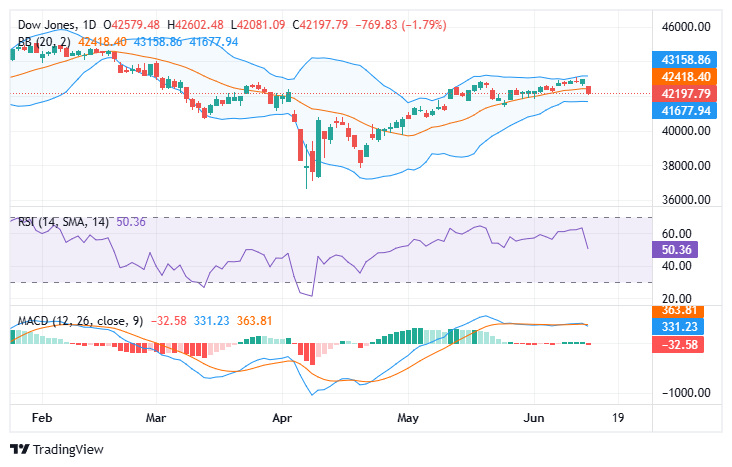
On June 16, 2025, the Dow Jones Industrial Average (US 30) closed at 42,081.49, down 79 points or 0.02% from the previous session. The index opened at 42,197.79, hit a high of 42,898.79, and a low of 42,786.65 during the trading day. The session reflects a cautious market sentiment as the index struggles to regain its recent highs.

Technical Analysis: What the Chart Tells Us

Price Action and Bollinger Bands

The 1-hour chart of the Dow Jones Industrial Average, plotted with Bollinger Bands (20-period SMA, 2 standard deviations), provides a clear view of recent price action. The middle band (20-period SMA) stands at 42,704.82, with the upper band at 43,305.51 and the lower band at 42,692.88.

  • Late May to Early June Uptrend: From May 27 to June 6, the Dow saw a steady climb, breaking above the upper Bollinger Band around June 4, peaking near 43,328.10. This breakout indicated strong bullish momentum, though it also hinted at overbought conditions.
  • Mid-June Consolidation: Between June 6 and June 11, the index consolidated, hovering around the 20-period SMA (42,704.82) and briefly dipping toward the lower Bollinger Band. This phase suggested a pause in momentum as investors reassessed positions.
  • Recent Decline: On June 12, the Dow faced a sharp decline, dropping below the 20-period SMA and briefly touching the lower Bollinger Band at 42,203.25. The index has since struggled to recover, with the June 16 close at 42,081.49, below the 20-period SMA, signaling potential bearish pressure.

Relative Strength Index (RSI)

The RSI (14-period) on the 1-hour chart is currently at 34.73, nearing the oversold territory (below 30). The RSI peaked above 70 (overbought) around June 4, coinciding with the index’s rally to 43,328.10. It then declined steadily, dropping to 34.73 by June 16, reflecting weakened momentum.

  • Interpretation: The RSI near oversold levels suggests that the Dow may be due for a short-term bounce. However, a sustained RSI below 40 could indicate continued selling pressure, especially if the index fails to reclaim the 20-period SMA.

Volume and Market Participation

The chart indicates a “!” symbol next to the volume, suggesting a spike in trading activity on June 16. This increased volume during the recent decline could reflect heightened selling pressure or profit-taking by investors. Monitoring volume trends in the coming sessions will be crucial to gauge whether this selling is a short-term correction or the start of a broader downtrend.

Key Levels to Watch

The Dow’s current position below the 20-period SMA (42,704.82) suggests a bearish tilt in the short term. Here are the critical levels to monitor:

  • Support Levels: Immediate support lies at the recent low of 42,081.49. A break below this could see the index test the lower Bollinger Band at 42,692.88, with further support near the 42,000 psychological level.
  • Resistance Levels: On the upside, the 20-period SMA at 42,704.82 acts as the first resistance. A break above this could target the upper Bollinger Band at 43,305.51, with the recent high of 43,328.10 as a key level to reclaim for bullish confirmation.

Market Sentiment and Broader Context

The U.S. market is currently navigating a mix of economic signals, including inflation concerns, potential Federal Reserve rate decisions, and upcoming corporate earnings. The Dow’s recent pullback may reflect profit-taking after the early June rally, combined with uncertainty around global economic growth. Investors are likely to remain cautious until clearer signals emerge from macroeconomic data or policy announcements.

Conclusion: A Market at a Crossroads

The Dow Jones Industrial Average on June 16, 2025, is showing signs of weakness, trading below its 20-period SMA with an RSI nearing oversold levels. While this could present a buying opportunity for short-term traders, the broader trend remains uncertain. Investors should watch for a break above 42,704.82 to signal a potential recovery, or a drop below 42,081.49, which could confirm further downside. As always, staying informed and monitoring key technical levels will be critical in this volatile environment.

Disclaimer

The information provided in this article is for informational purposes only and does not constitute financial advice. Investing in the stock market involves risks, and past performance is not indicative of future results. Readers are advised to conduct their own research or consult with a qualified financial advisor before making any investment decisions. The author and the publication are not responsible for any financial losses incurred as a result of acting on the information provided herein.

Nifty 50 Analysis: A Volatile Day in the Indian Market – June 16, 2025

17

Market Overview

On June 16, 2025, the Nifty 50 index experienced a volatile trading session, closing at 24,940.95, down 75 points or 0.4% from the previous session. The index opened at 24,946.50 and saw a high of 24,957.95 and a low of 24,940.50 during the day. Trading volume stood at 313.1 million shares, reflecting active participation amidst choppy market conditions.

Technical Analysis

Price Action and Bollinger Bands

The 1-hour chart of the Nifty 50 shows the index trading within Bollinger Bands (20-period SMA, 2 standard deviations). The middle band, which is the 20-period Simple Moving Average (SMA), is at 24,847.10, indicating the short-term trend. The upper band is at 25,109.96, and the lower band is at 24,584.25.

  • Early June Surge: From May 28 to June 4, the index saw a steady uptrend, breaking above the upper Bollinger Band around June 3, reaching a peak near 25,300. This breakout signaled strong bullish momentum, often associated with overbought conditions.
  • Mid-June Correction: Between June 4 and June 10, the index experienced a sharp correction, dropping below the 20-period SMA and touching the lower Bollinger Band near 24,584.25. This pullback indicated profit-taking and a potential reversal in sentiment.
  • Consolidation and Recovery: Post-correction, the Nifty 50 entered a consolidation phase, oscillating between the 20-period SMA and the lower Bollinger Band. By June 12, the index began a recovery, climbing back toward the 20-period SMA and briefly touching the upper band again around June 14.
  • Recent Movement: On June 16, the index is trading just above the 20-period SMA at 24,940.95, showing signs of consolidation after the recent recovery. However, the failure to sustain above the 25,000 mark suggests caution among investors.

Relative Strength Index (RSI)

The RSI (14-period) on the 1-hour chart is currently at 54.14, placing it in the neutral zone (between 30 and 70). The RSI peaked above 70 (overbought) around June 3, coinciding with the index’s rally to 25,300. It then dropped to 40.45 during the correction phase, narrowly avoiding the oversold territory (below 30). The recent recovery has brought the RSI back to a balanced level, indicating neither overbought nor oversold conditions at the moment.

  • Interpretation: The neutral RSI suggests that the market is in a wait-and-watch mode, with no immediate signs of extreme momentum in either direction. However, a drop below 50 could signal renewed selling pressure, while a move above 60 might indicate a return of bullish sentiment.

Volume Analysis

Trading volume on June 16 was 313.1 million shares, which is relatively high compared to the average volume over the past month. Spikes in volume were noticeable during the early June rally and the subsequent correction, reflecting heightened market activity during those periods. The current volume suggests active participation, but without a clear directional bias, as the index remains range-bound.

Market Sentiment and Key Levels to Watch

The Nifty 50’s current position just above the 20-period SMA (24,847.10) indicates a neutral-to-bullish bias in the short term. However, the inability to break above the psychological 25,000 level and the upper Bollinger Band (25,109.96) suggests resistance to further upside.

  • Support Levels: Immediate support lies at the 20-period SMA (24,847.10). A break below this could see the index test the lower Bollinger Band at 24,584.25, a key level that held during the mid-June correction.
  • Resistance Levels: On the upside, the 25,000 mark remains a psychological barrier, with the upper Bollinger Band at 25,109.96 acting as a stronger resistance. A sustained break above this could signal a resumption of the bullish trend.

Broader Market Context

The Indian market has been navigating global uncertainties, including fluctuations in crude oil prices, geopolitical tensions, and expectations around monetary policy decisions from the Reserve Bank of India (RBI). Domestically, investors are also monitoring the upcoming quarterly earnings season, which could influence sector-specific movements within the Nifty 50.

Conclusion

The Nifty 50’s performance on June 16, 2025, reflects a market in consolidation after a volatile few weeks. While the index remains above its 20-period SMA, signaling a mild bullish bias, the failure to break above 25,000 and the neutral RSI suggest caution. Traders should watch for a breakout above 25,109.96 for bullish confirmation or a drop below 24,847.10 for bearish signals. Volume trends and broader market developments will also play a crucial role in determining the next directional move.

Disclaimer

The information provided in this article is for informational purposes only and does not constitute financial advice. Investing in the stock market involves risks, and past performance is not indicative of future results. Readers are advised to conduct their own research or consult with a qualified financial advisor before making any investment decisions. The author and the publication are not responsible for any financial losses incurred as a result of acting on the information provided herein.

Nvidia CEO Jensen Huang Champions Sovereign AI in Europe Amid Growing Traction

10

Paris, June 16, 2025

Nvidia (NVD) CEO Jensen Huang has been advocating for “sovereign AI” since 2023, a concept emphasizing that each nation should develop and control its own artificial intelligence infrastructure to preserve its unique language, culture, history, and knowledge. During a high-profile tour of Europe’s major capitals—London, Paris, and Berlin—last week, Huang announced a series of partnerships and projects aimed at bolstering the continent’s AI capabilities, while underscoring the region’s current shortage of AI infrastructure. His vision is gaining momentum as European leaders grow increasingly cautious about reliance on a few U.S. tech giants, especially following recent tensions with U.S. President Donald Trump.

Speaking at Nvidia’s GTC Paris event, held alongside VivaTech on June 11, Huang declared, “We are going to invest billions in here … but Europe needs to move into AI quickly.” He projected a tenfold increase in Europe’s AI computing capacity within two years, driven by the construction of over 20 AI “factories”—data centers designed to generate AI tokens, some exceeding a gigawatt in capacity, placing them among the world’s largest. These investments, Huang argued, will position Europe to transition from merely adopting AI to building it, fostering economic growth and technological independence.

Key Partnerships and Projects

Huang unveiled several strategic collaborations to support Europe’s sovereign AI ambitions:

  • France: A landmark partnership with French startup Mistral will see the deployment of 18,000 Nvidia Grace Blackwell chips to build an “AI cloud” tailored to European businesses. This initiative, set to expand in 2026, aims to provide a homegrown alternative to U.S.-based AI services. Mistral’s CEO, Arthur Mensch, emphasized the need for European tech champions, stating, “There’s no reason why Europe shouldn’t have tech champions”.
  • Germany: Nvidia is collaborating with Deutsche Telekom to advance sovereign AI infrastructure, leveraging Nvidia’s Nemotron tool to develop large language models (LLMs) tuned to local linguistic and cultural contexts.
  • United Kingdom: Huang joined U.K. Prime Minister Sir Keir Starmer at London Tech Week to announce a £1 billion investment in AI research compute by 2030, supported by a national AI skills initiative through Nvidia’s Deep Learning Institute. Nvidia also plans to establish an AI lab in the U.K. to upskill developers.
  • Italy and Armenia: Additional infrastructure projects were announced, though specifics remain limited.
  • Telecom and Cloud Providers: Partnerships with companies like Orange and Telefonica will enhance AI application deployment and LLM development across the region.

Nvidia is also expanding its technology centers in Finland, Germany, Spain, Italy, and the U.K., and integrating its CUDA-Q platform into Denmark’s Gefion supercomputer to advance hybrid quantum-AI research.

Sovereign AI: A Strategic Imperative

Huang’s pitch for sovereign AI resonates with European policymakers wary of over-dependence on U.S. tech firms like Microsoft and Amazon. The concept aligns with the European Union’s broader push for digital sovereignty, evidenced by its February 2025 announcement to build four “AI gigafactories” at a cost of $20 billion to reduce reliance on foreign technology. Huang has reportedly assured the European Commission that Nvidia will allocate chip production to support these factories, further cementing its role in Europe’s AI ecosystem.

“Sovereign AI is an imperative—no company, industry, or nation can outsource its intelligence,” Huang said during a VivaTech keynote, comparing AI infrastructure to essential utilities like electricity and the internet. He emphasized that Nvidia’s GB200 NVL72, a high-performance AI platform now in full production, is designed for “thinking machines” capable of reasoning and planning, making it ideal for sovereign AI applications ranging from LLMs to quantum computing.

Geopolitical Context and Challenges

Huang’s European tour comes at a time of heightened geopolitical scrutiny. U.S. export controls on advanced AI chips have restricted Nvidia’s access to the Chinese market, prompting Huang to warn that Chinese competitors like Huawei are becoming “formidable” and could dominate AI infrastructure in regions where U.S. firms are absent. He expressed concern that a lack of U.S. participation in global markets could cede influence to Chinese technology, stating, “It’s even more important that the American technology stack is what AI developers around the world build on”.

In Europe, Huang’s vision has been met with enthusiasm but also skepticism. Posts on X reflect excitement about Europe’s AI expansion, with users noting Huang’s prediction of a 10x increase in AI capacity. However, some question the feasibility of rapid scaling given regulatory hurdles and energy demands. Others highlight the strategic importance of sovereign AI in reducing Europe’s reliance on U.S. tech, aligning with Huang’s narrative.

Economic and Industry Impact

Nvidia’s push into Europe is not just about philanthropy—it’s a lucrative opportunity. Huang described sovereign AI as a “multibillion-dollar vertical market” in Nvidia’s Q2 2025 earnings, with the company already supplying AI systems to nations like India, Japan, and France. By positioning itself as a partner in building AI infrastructure, Nvidia ensures demand for its GPUs, particularly as U.S. export restrictions limit sales in China.

Huang also highlighted the broader industrial implications, showcasing Nvidia’s Omniverse platform for digital twins and the DRIVE platform for autonomous vehicles, both of which are being adopted by European industries. A demonstration featuring a robot named Grek, developed with DeepMind and Disney, underscored Nvidia’s advancements in robotics, signaling a future where AI permeates manufacturing, transportation, and beyond.

Looking Ahead

As Europe races to build its AI infrastructure, Nvidia’s role as a key enabler is undeniable. Huang’s charm offensive, marked by high-profile appearances with leaders like French President Emmanuel Macron and U.K. Prime Minister Keir Starmer, has solidified his status as a tech rockstar. Yet, challenges remain, including ensuring energy sustainability for massive AI factories and navigating complex EU regulations.

For now, Huang’s message is clear: Europe must seize the AI moment to secure its technological and cultural sovereignty. With billions in investments and a slew of partnerships, Nvidia is betting big on the continent’s potential to become a global AI powerhouse.

Sources: Reuters, Nvidia Blog, CNBC, Business Insider, Quantum Zeitgeist, X posts

Israel-Iran Military Clash Sparks Global Market Shock and Oil Surge: Operation Rising Lion vs. Honest Promise 3

5,853

Conflict Overview

In a dramatic escalation of Middle East tensions, a direct military confrontation between Israel and Iran unfolded over the weekend of June 13–14, 2025, triggering regional fears and rattling global markets. Dubbed “Operation Rising Lion” by Israel and “Operation Honest Promise 3” by Iran, the conflict was sparked by Israel’s preemptive airstrikes on Iranian nuclear facilities, followed by Iran’s retaliatory missile barrage targeting multiple Israeli cities.

The engagement marked the most significant military clash between the two nations to date, involving over 150 Israeli airstrikes and approximately 200 Iranian ballistic missiles. Several unconfirmed reports suggest high-profile Iranian casualties, including IRGC commander Hossein Salami and military chief Mohammad Bagheri.


Military Developments

Israel’s Strategy:
Israel launched its initial wave of strikes early Friday, June 13, hitting nuclear sites near Natanz, energy infrastructure in Shahran and southern Tehran, and the Defense Ministry HQ. A second wave followed on Sunday, June 15, expanding to over 150 targets. The Israeli Defense Forces claimed air superiority over Tehran. Prime Minister Benjamin Netanyahu framed the campaign as a response to Iran’s escalating nuclear threat, warning of further action.

Iran’s Response:
Iran responded with four waves of ballistic missile attacks, primarily targeting Tel Aviv, Haifa, Jerusalem, and Rishon LeZion, resulting in 3–10 deaths and over 60 injuries in Israel. Notably, a residential building in Rishon LeZion was heavily damaged. Iran also launched 100 drones, all of which were reportedly intercepted by Israeli and regional defenses.

Ayatollah Ali Khamenei vowed a “bitter and painful” response, appointed a new armed forces chief, and declared nuclear negotiations with the U.S. unjustifiable.


Casualties and Humanitarian Impact

In Iran, the conflict resulted in at least 78 deaths on Friday alone, with a residential building collapse in Shahid Chamran town, Tehran, killing 60 people including 29 children. Over 320 people were injured, many of them women and children. Fires were reported at targeted oil facilities but were brought under control by Saturday evening.

Israeli casualties ranged from 3 to 10, depending on sources such as The Washington Post and The Guardian, with notable injuries in Rishon LeZion, Gush Dan, and Shfela. Thousands of Israeli civilians rushed to bomb shelters, and Ben Gurion Airport was temporarily closed.


Regional and International Involvement

The conflict drew in other regional actors:

  • Houthi rebels in Yemen launched missiles at Jaffa in solidarity with Iran, marking the first direct engagement by an Iranian ally.
  • The U.S. assisted Israel in intercepting Iranian missiles; American troops in Iraq and Syria took shelter during the strikes.
  • President Donald Trump praised Israel’s actions and warned Iran against targeting U.S. military bases, threatening full military retaliation.
  • Germany, France, and the UK offered nuclear negotiations, which Iran rejected.
  • Talks in Oman between the U.S. and Iran were canceled.
  • Unconfirmed reports suggest Brazil and Turkey may be covertly assisting Iran, although this remains speculative.

Market Impacts: Global Financial Jitters

The geopolitical upheaval had immediate and pronounced effects on financial markets, particularly in the energy and equities sectors.

Oil Prices Surge:

  • Brent Crude rose 6–8% to $74/barrel, up from ~$69 pre-strike.
  • WTI Crude increased 8%, reaching $73.50/barrel from ~$68.
    This surge reflects concerns over supply disruptions, especially given Houthi threats to Red Sea shipping lanes.

Equity Markets React:

  • S&P 500 futures fell 1.63–1.8%
  • Nasdaq dropped 1.74%
  • Russell 2000 plunged 2.74%
  • Volatility Index (VIX) futures jumped 17.5%, highlighting investor anxiety

Safe-Haven Demand Rises:
Gold and the U.S. dollar saw increased interest as investors hedged against uncertainty, while concerns over shipping costs and supply chain disruptions further pressured global trade outlooks.


Strategic Outlook: A Regional War Brewing?

This military exchange escalates long-standing tensions over Iran’s nuclear program. Israel claims its strikes disrupted Iran’s advanced nuclear enrichment, while Iran boasts a stockpile of 2,000 missiles and a production capacity of 300 per month. The Iron Dome intercepted most missiles, but gaps in Israel’s defense led to limited successful hits.

Iran, on the other hand, reported partial interception of Israeli strikes, but the scale of damage suggests limitations in its defensive capabilities.

With Houthi involvement, threats against Western military bases, and global oil supply risks, analysts warn the region is on the brink of broader conflict.


Conclusion

The Israel-Iran military conflict in June 2025 has not only amplified fears of a regional war but also shaken global financial stability, particularly in energy markets. While military actions have temporarily subsided, both sides continue to issue strong warnings, and the potential for further escalation remains high. Investors, policymakers, and civilians across the globe now watch closely as the Middle East sits at a dangerous crossroads.

Dow Jones Forecast: Stock Market Analysis for Next Week June 2025

20

Wall Street Plunges Amid Geopolitical Tensions

On Friday, June 13, 2025, Wall Street closed sharply lower as geopolitical tensions escalated with Iran’s retaliation against Israel. The Dow Jones Industrial Average (DJIA) dropped 1.79%, or 769.83 points, to end at 42,197.79. The S&P 500 fell 1.13% to 5,976.97, while the Nasdaq declined 1.30% to 19,406.83, reflecting a broad market sell-off.

Technical Analysis: Bearish Momentum Dominates

The DJIA’s recent price action signals caution for investors. After peaking near 43,158.86 in mid-May, the index has been in a downtrend, breaking below its 20-day Simple Moving Average (SMA) at 42,418.40. On June 13, the index closed near the lower Bollinger Band at 41,677.94, hinting at potential oversold conditions.

  • RSI (14): The Relative Strength Index stands at 50.36, trending downward but not yet in oversold territory (below 30). This suggests the selling pressure may continue before a reversal.
  • MACD (12, 26, 9): The MACD line at -32.58 is well below the signal line at 331.23, with a bearish histogram of -363.81, confirming strong downward momentum.

What’s Driving the Decline?

Several factors contributed to the market’s sharp decline:

  • Geopolitical Risks: Iran’s retaliation against Israel has heightened uncertainty, prompting investors to reduce risk exposure.
  • Market Sentiment: The broader market sell-off in the S&P 500 and Nasdaq reflects a flight to safety, with investors favoring bonds over equities.
  • Technical Breakdown: The DJIA’s failure to hold key support levels has triggered stop-loss selling, exacerbating the decline.

Next Week Outlook: Volatility Ahead

Looking ahead to the week of June 16, 2025, the DJIA faces critical levels:

  • Support to Watch: The lower Bollinger Band at 41,677.94 is the immediate support. A break below this could see the index test 41,000, a psychologically significant level.
  • Resistance: The 20-day SMA at 42,418.40 will act as near-term resistance. A recovery above this level could signal a short-term bounce toward 42,800.
  • Key Catalysts:
    • CPI Data: The Consumer Price Index report on June 18 will provide insights into inflation trends, potentially influencing Federal Reserve policy expectations.
    • Geopolitical Developments: Any de-escalation in the Iran-Israel conflict could spark a relief rally, while further escalation may deepen the sell-off.

Investor Takeaways

The Dow Jones is at a pivotal juncture. While technical indicators suggest potential for a near-term bounce, geopolitical risks and upcoming economic data could drive further volatility. Investors should:

  • Monitor the 41,677.94 support level closely.
  • Consider hedging portfolios with defensive assets like gold or bonds.
  • Stay updated with our daily market insights for the latest developments.

Stay Informed

Follow our blog for real-time stock market updates and expert analysis. What are your thoughts on the Dow Jones outlook? Share your comments below!

Disclaimer

The information provided in this article is for informational purposes only and does not constitute financial, investment, or trading advice. Past performance is not indicative of future results. Investing in the stock market involves risks, including the potential loss of principal. Readers are encouraged to conduct their own research or consult with a qualified financial advisor before making any investment decisions. The views and opinions expressed in this article are those of the author and do not necessarily reflect the official policy or position of any other agency, organization, or company.