Introduction
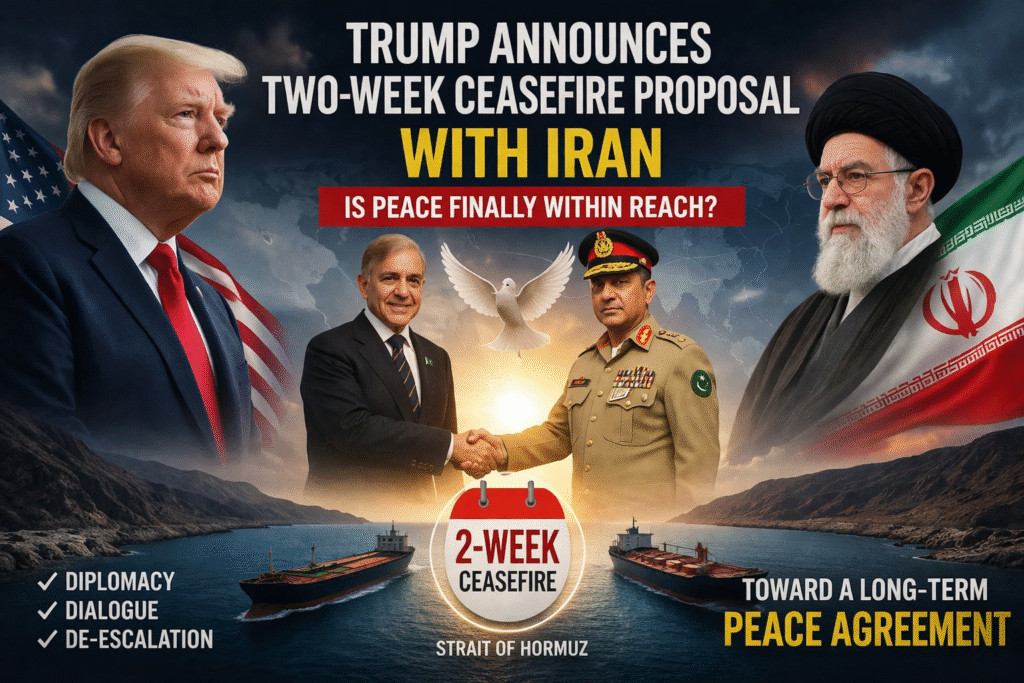
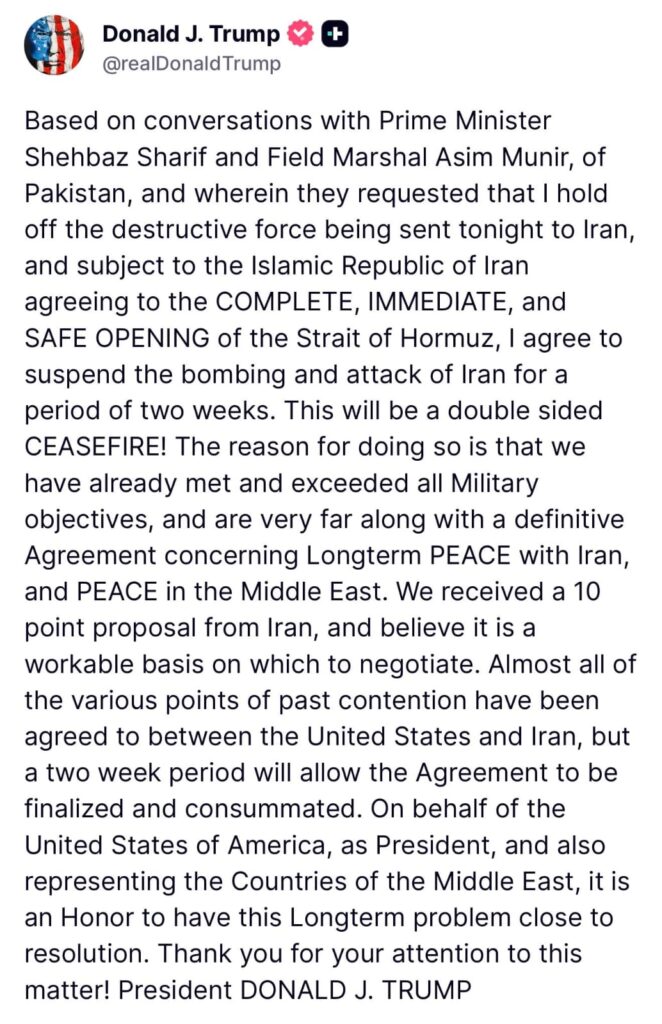
In a surprising development that could reshape geopolitical dynamics, former U.S. President Donald J. Trump has announced a proposed temporary ceasefire involving Iran. The statement, reportedly based on discussions with Pakistani leadership, suggests a pause in military actions for two weeks, creating a potential window for long-term peace negotiations. At a time when global tensions remain high, this announcement has quickly drawn attention from policymakers, investors, and international observers alike. The proposal also touches on the strategic importance of the Strait of Hormuz, a critical global oil route, making this not just a political story but an economic one as well.
Background: Rising Tensions and Strategic Importance of the Middle East
The Middle East has long been a focal point of global geopolitical tensions, particularly involving the United States and Iran. Over the years, disputes over nuclear programs, regional influence, and military actions have created a fragile environment prone to sudden escalations.
One of the most sensitive flashpoints in this region is the Strait of Hormuz, through which nearly a fifth of the world’s oil supply passes. Any disruption in this narrow waterway can trigger global economic instability, affecting oil prices, stock markets, and international trade.
In recent weeks, tensions reportedly escalated to a point where military action appeared imminent. However, diplomatic backchannel communications involving Pakistan’s Prime Minister Shehbaz Sharif and Army Chief Asim Munir seem to have played a key role in de-escalation efforts.
This latest ceasefire proposal signals a possible shift from confrontation toward negotiation, offering a rare moment of cautious optimism.
Key Developments: Inside the Ceasefire Proposal
According to the statement shared publicly, the proposed agreement involves a two-week suspension of military operations against Iran, conditional upon Iran agreeing to ensure the complete and safe reopening of the Strait of Hormuz.
The announcement highlights several critical points:
- The ceasefire is described as “double-sided,” indicating mutual restraint.
- The U.S. claims to have already achieved key military objectives.
- A 10-point proposal from Iran is reportedly under consideration as a basis for negotiations.
- The two-week pause is intended to finalize a long-term peace agreement.
What makes this development particularly notable is the tone of the message. Rather than emphasizing conflict, the statement focuses on resolution, negotiation, and long-term stability in the Middle East.
This shift in tone could signal a broader strategic recalibration, especially if both sides are genuinely willing to engage in meaningful dialogue.
Global Reactions: Mixed Signals from Political and Market Circles
The announcement has triggered a wide range of reactions across political and economic spheres. While some analysts view it as a positive step toward de-escalation, others remain cautious, citing the complexity of U.S.-Iran relations.
In diplomatic circles, the involvement of Pakistan is being seen as a significant factor. Pakistan has historically maintained relationships with both Western and regional powers, making it a potential mediator in sensitive negotiations.
Meanwhile, global markets are closely monitoring the situation. Any signs of stability in the Middle East tend to ease concerns around oil supply disruptions. This, in turn, can influence inflation expectations and investor sentiment across major economies.
However, uncertainty still lingers. The success of the ceasefire depends heavily on whether both parties adhere to the proposed terms and whether negotiations can progress within the limited timeframe.
Strategic Analysis: What This Means for Geopolitics and Economy
From a geopolitical perspective, this ceasefire proposal could mark a turning point—if it leads to sustained dialogue. The emphasis on reopening the Strait of Hormuz suggests that economic considerations are playing a central role in decision-making.
For the United States, stabilizing the region aligns with broader strategic goals, including maintaining global energy security and reducing military engagement abroad.
For Iran, agreeing to such terms could help ease international pressure and open pathways for economic recovery.
Economically, the implications are significant:
- Oil Markets: Stability in the Strait of Hormuz could prevent sharp spikes in oil prices.
- Stock Markets: Reduced geopolitical risk often supports bullish sentiment.
- Global Trade: Safe shipping routes ensure smoother international commerce.
However, the situation remains fluid. Markets are known to react quickly to geopolitical developments, and any deviation from the proposed plan could reverse current optimism.
Challenges and Risks
Despite the positive tone, several challenges could hinder progress:
- Trust Deficit: Decades of conflict have created deep mistrust between the U.S. and Iran.
- Short Timeline: Two weeks may not be sufficient to finalize a comprehensive agreement.
- External Influences: Other regional players could impact negotiations.
- Verification Issues: Ensuring compliance on both sides remains a key concern.
These factors highlight that while the proposal is promising, it is far from guaranteed success.
Future Outlook: A Step Toward Peace or Temporary Pause?
Looking ahead, the next two weeks will be critical. If negotiations progress smoothly, this could lead to a broader peace framework that stabilizes the region for years to come.
Possible Scenarios:
Optimistic Scenario:
Both sides adhere to the ceasefire, finalize agreements, and establish long-term peace.
Neutral Scenario:
The ceasefire holds temporarily, but negotiations extend beyond the initial timeframe.
Pessimistic Scenario:
Talks collapse, leading to renewed tensions or even escalation.
At this stage, the global community remains watchful but hopeful. The outcome will depend on diplomacy, mutual trust, and the willingness to compromise.
Conclusion
The ceasefire proposal announced by Donald J. Trump represents a significant moment in ongoing Middle East tensions. While uncertainties remain, the shift toward dialogue and negotiation offers a glimmer of hope in an otherwise volatile landscape.
For global markets, policymakers, and everyday citizens, the stakes are high. A successful agreement could bring not only political stability but also economic relief across regions.
As the situation unfolds, one thing is clear—the world will be watching closely.
Disclaimer
This article is based on publicly available information and statements. It is intended for informational purposes only and does not represent official policy positions or verified diplomatic outcomes.