A delicate geopolitical situation continues to unfold in the Middle East as Israel has agreed to initiate negotiations with Lebanon, marking a potentially significant shift in regional dynamics. The announcement comes at a time when a fragile ceasefire between the United States and Iran remains under strain, and tensions surrounding the strategically vital Strait of Hormuz continue to raise global concerns.
A Narrow Diplomatic Window Opens
The recent two-week truce between the United States and Iran, reportedly brokered by Pakistan, has created a limited but crucial opportunity for diplomacy. While the agreement has temporarily reduced direct hostilities, it remains far from stable. Both sides have unresolved demands, and mutual accusations of ceasefire violations continue to cast doubt over its sustainability.
Initial signs suggested cautious optimism. Gulf nations reported a noticeable decline in Iranian missile and drone activity following an intense wave of strikes earlier in the week. Within 20 to 24 hours after the initial escalation, regional airspace appeared relatively calm. Notably, no threats were recorded against Israel after the early hours of April 8.
Market analysts and global investors reacted positively to the ceasefire development. According to strategists at Deutsche Bank, the mere existence of an agreement—even one surrounded by uncertainty—helped boost confidence and provided a clearer outlook toward potential de-escalation.
Israel-Lebanon Negotiations Gain Momentum
In a significant development, Israeli Prime Minister Benjamin Netanyahu confirmed that Israel is prepared to enter direct negotiations with Lebanon. This move follows repeated requests from Lebanese authorities to initiate dialogue.
Netanyahu stated that the discussions would primarily focus on two critical objectives: the disarmament of Hezbollah and the establishment of peaceful relations between the two neighboring nations. He also acknowledged Lebanon’s internal calls for demilitarization, particularly in Beirut, signaling a possible alignment of interests.
However, this diplomatic gesture comes amid continued Israeli military actions against Hezbollah targets in Lebanon. These strikes have drawn sharp criticism from Iran, which labeled them as violations of the ceasefire and questioned the legitimacy of ongoing negotiations under such conditions.
Pakistan Emerges as a Key Mediator
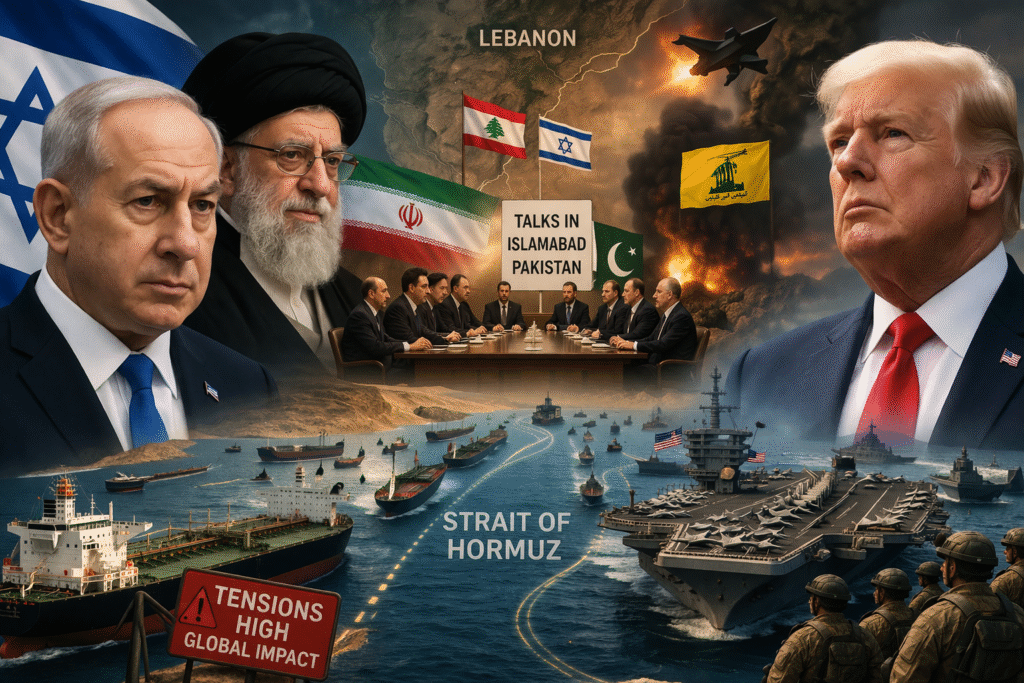
All attention is now shifting toward Islamabad, where high-stakes talks are scheduled to take place over the weekend. Pakistan has positioned itself as a central mediator in the conflict, facilitating dialogue between key stakeholders.
Iranian negotiators are expected to arrive in Pakistan, led by senior diplomatic representatives. Meanwhile, the United States delegation will be headed by Vice President JD Vance, accompanied by prominent advisers including Jared Kushner and Steve Witkoff. The first round of formal discussions is set to begin on Saturday.
Pakistan has strongly condemned Israel’s recent military actions in Lebanon, warning that such moves threaten not only regional stability but also broader global peace efforts. Several European nations, including France and Italy, have echoed similar concerns, calling for restraint and renewed commitment to diplomatic solutions.
Strait of Hormuz: A Global Flashpoint
While diplomatic efforts continue, tensions around the Strait of Hormuz remain a major point of concern. This narrow waterway is one of the most critical النفط shipping routes in the world, handling a significant portion of global energy supplies.
Iran has indicated that maritime traffic through the strait may resume, but only under strict conditions. Officials in Tehran have tied safe passage to changes in U.S. military posture and a halt to Israeli operations in Lebanon. They emphasized that any reopening of the strait would adhere to international law, but only if their conditions are met.
In the meantime, Iran has tightened its control over the region. The Iranian navy has issued warnings to commercial vessels, urging them to coordinate closely with military authorities and follow designated routes due to potential risks, including naval mines.
Shipping data highlights the scale of disruption. Vessel movement through the strait has dropped significantly, with only a limited number of ships operating with active tracking systems. A considerable portion of ongoing activity involves so-called “dark fleet” tankers, which operate without tracking devices and are often associated with sanctioned oil transport.
Economic Implications and Global Reactions
The uncertainty surrounding the Strait of Hormuz has sparked concerns among global leaders and economists. Any prolonged disruption could have far-reaching economic consequences, particularly in energy markets.
Italian Prime Minister Giorgia Meloni warned that additional restrictions imposed by Iran could lead to unpredictable economic outcomes. She emphasized the importance of maintaining freedom of navigation and preventing further escalation that could destabilize global trade.
The situation has also placed pressure on international oil prices, shipping costs, and supply chains. Analysts warn that even temporary disruptions could trigger volatility across financial markets.
U.S. Maintains Military Presence
Amid ongoing negotiations, U.S. President Donald Trump has taken a firm stance on military engagement in the region. He հայտարարել that American forces will remain deployed around Iran until a comprehensive and binding agreement is reached.
In a recent statement, Trump reiterated his core demands: a complete halt to Iran’s nuclear weapons ambitions and the reopening of the Strait of Hormuz for safe and unrestricted navigation. He claimed that such an agreement had been previously understood but remains unfulfilled.
Trump also issued a warning that failure to reach a deal could lead to renewed military conflict, although he expressed confidence that such a scenario is unlikely.
The United States has significantly increased its military presence in the Middle East in recent months. This includes the deployment of two aircraft carrier strike groups and approximately 50,000 troops, marking the largest buildup in the region since 2003.
Persistent Challenges to Peace
Despite diplomatic efforts, several obstacles continue to hinder progress. Iran has accused both the United States and Israel of violating the terms of the ceasefire shortly after it was established. Tehran has also insisted that any comprehensive agreement must include Lebanon, complicating the negotiation framework.
Additionally, Iran has resisted U.S. demands to halt its uranium enrichment program, a longstanding point of contention that remains central to the conflict.
Meanwhile, Israel maintains that its military operations in Lebanon are separate from the U.S.-Iran ceasefire, further complicating efforts to achieve a unified resolution.
The Road Ahead
As negotiations prepare to begin in Pakistan, the international community remains cautiously hopeful yet deeply aware of the challenges ahead. The coming days are expected to be critical in determining whether the current ceasefire can evolve into a more durable peace agreement.
Much will depend on the willingness of all parties to compromise and address core issues, including security concerns, regional influence, and economic stability.
For now, the Middle East stands at a crossroads—caught between the promise of diplomacy and the خطر of renewed conflict. The outcome of the upcoming talks could shape not only regional dynamics but also global economic and political landscapes for months, if not years, to come.